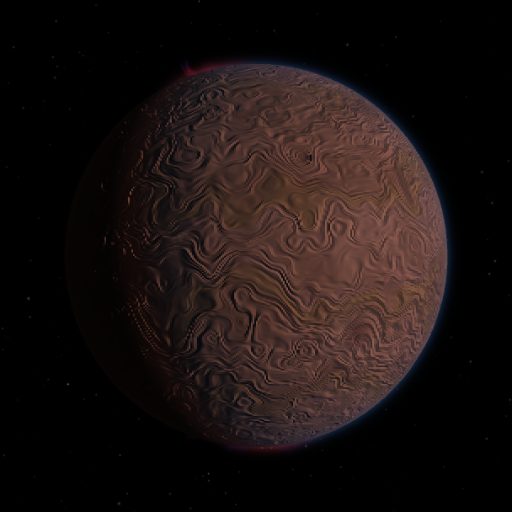
HIP 23575 b
Also written HIP 23575b
- Mass
- 12.50 × Earth
- Radius (est.)
- 3.58 × Earth
- Gravity (est.)
- 0.98 g
- Surface (est.)
- 878 K
- Year
- 11.1 days
- From Earth
- 158 ly
- Mass
- 12.50 × Earth
- Radius (est.)
- 3.58 × Earth
- Gravity (est.)
- 0.98 g
- Surface (est.)
- 878 K
- Year
- 11.1 days
- From Earth
- 158 ly
HIP 23575 system
- Type
- G-type (Yellow (Sun-like))
- Spectral type
- G5V
- Temperature
- 5,574 K
- Radius
- 0.939 ☉
- Mass
- 0.98 ☉
- Planets
- 1
- Luminosity
- 0.767 ☉
Published by the Extrasolar Planets Encyclopaedia. This world’s temperature and habitability score are computed from its star’s published radius and temperature.
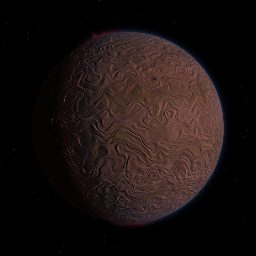 HIP 23575 b0.096 AUYou are here13 M⊕
Star and planets drawn to scale: the star is 29 times as wide as HIP 23575 b, so only its edge is in view. Orbits spaced as in the star system view.
Estimated: this planet doesn't transit its star, so its size is inferred, not measured
HIP 23575 b, from the Extrasolar Planets Encyclopaedia (found 2026). Measured: 12.5 Earth masses, 0.0962 AU, a 5574 K G-type star. Composition inferred from a estimated bulk density of 0.27x Earth's, modeled rather than measured since this isn't a transiting planet, larger than even a pure water/ice world of this mass, suggesting a water-rich interior under roughly a 9% hydrogen/helium envelope by mass, with a day locked to its 11.1-day year, as it is predicted to be tidally locked: at this distance its star would have stopped its spin within 33 million years.
Surface. No solid surface - a deep volatile envelope over a supercritical water mantle and hot-ice interior


Hydrogen and helium with water, methane, and ammonia ices
Hydrogen-rich atmosphere typical of gas giants