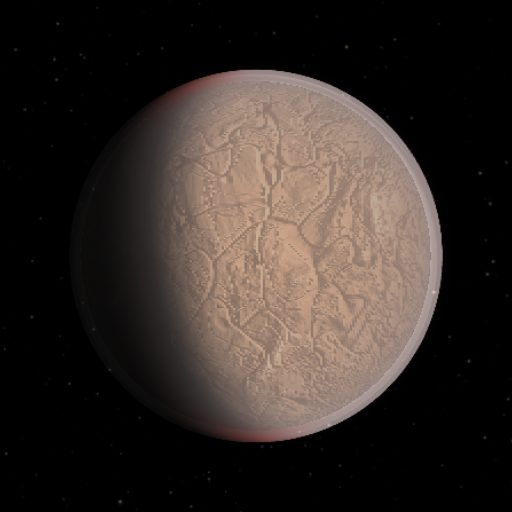
HD 110067 b is the innermost of six planets around HD 110067, a star a little smaller than the Sun about 100 light-years away, and the planet whose rhythm unlocked the whole system. All six cross in front of their star and are sub-Neptunes, planets between Earth and Neptune in size. HD 110067 b orbits every 9.11 days and is about 2.2 times Earth's width.
NASA's TESS satellite saw dips in the star's light in 2020 and again in 2022, but the data could be fitted in more than one way. A team led by Rafael Luque used ESA's CHEOPS satellite to confirm a third planet and found that the inner three orbit in a 3 to 2 rhythm: for every three orbits of b, c makes two, and for every three of c, d makes two. That pattern, called a resonance, let them predict where the other planets' periods should be, and those predictions matched the remaining dips in the TESS data. Luque told ESA that without CHEOPS's detection, it would have been impossible.
HD 110067 b is one of three planets in the system with a measured mass, about 5.7 Earth masses, from the star's wobble. For its size, that is a low density, which, the discovery team said, suggests a large atmosphere dominated by hydrogen. Receiving about 70 times the light Earth gets from the Sun, it is far too hot for liquid water. ESA noted that only about one percent of multi-planet systems are still in resonance, which means this system has hardly changed since it formed more than a billion years ago.