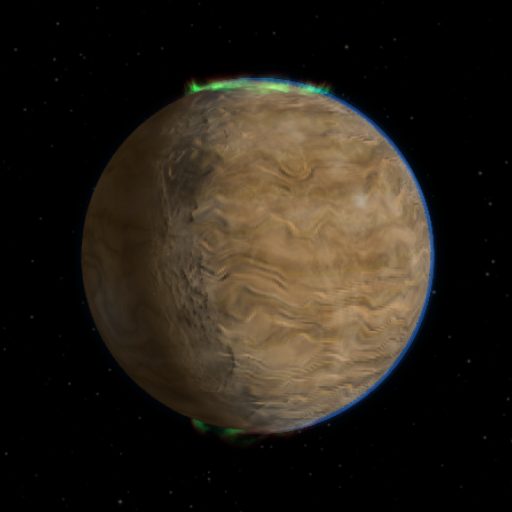
HD 110067 g is the outermost of six sub-Neptunes around HD 110067, a star a little smaller than the Sun about 100 light-years away. It orbits every 54.8 days and is about 2.6 times Earth's width. For each of its orbits, the innermost planet, HD 110067 b, completes six.
That precise relationship is what made it findable. NASA's TESS satellite had recorded single, unexplained dips in the star's light. After a team led by Rafael Luque used ESA's CHEOPS satellite to show that the three inner planets follow a 3 to 2 rhythm, they used that pattern to predict the possible periods of planets farther out. HD 110067 g closes the chain with a 4 to 3 resonance with its inner neighbour f. ESA described such resonances as rare, found in only about one percent of multi-planet systems, and said that the configuration shows this system has barely changed since it formed more than a billion years ago.
Its mass has not been measured; the discovery team set only an upper limit. In 2024 a team led by Caleb Lammers showed that the system is very likely a true resonant chain, since nonresonant versions nearly always become unstable within about 25 million years. Assuming that, they placed lower limits on the masses of the unmeasured planets. HD 110067 g is the coolest of the six, though it still receives about six times the light Earth gets from the Sun. The star's brightness makes the system one of the best places to compare the atmospheres of sub-Neptunes that formed together.