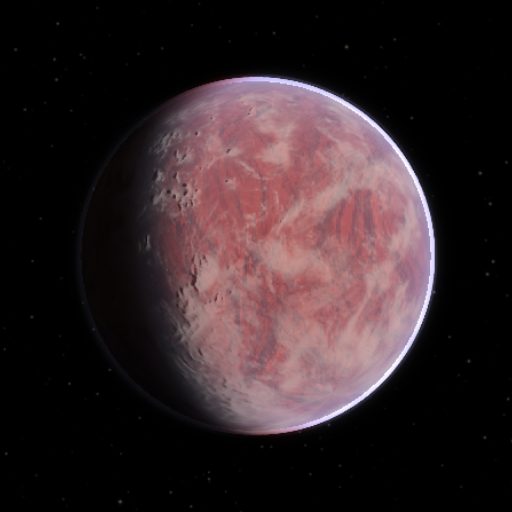
K2-72 c is the third of four planets around K2-72, a red dwarf about 220 light-years away. It crosses in front of its star every 15.2 days, and the NASA Exoplanet Archive lists its radius as about 1.16 times Earth's. It was found by NASA's K2 mission, the second phase of the Kepler space telescope, which spotted the small dips in starlight as each of the four planets passed in front of the star.
A team led by Ian Crossfield validated the four planets in 2016, from K2's first year of data, and highlighted the system for its compact layout, with orbits near simple ratios of one another. Measuring the star more precisely changes every planet's size, because a transit reveals a planet's size only in proportion to its star's. That was done in 2017 by a team led by Courtney Dressing, using infrared spectra of the star.
K2-72 c receives about 2.2 times the light Earth gets from the Sun, according to the archive, and has an estimated equilibrium temperature of about 330 kelvin. That puts it warmer than its outer sibling K2-72 e, which Dressing's team placed inside the star's optimistic habitable zone. Its mass of about 1.65 Earth masses in the archive is an estimate based on its size, not a measurement, so its makeup is not known.