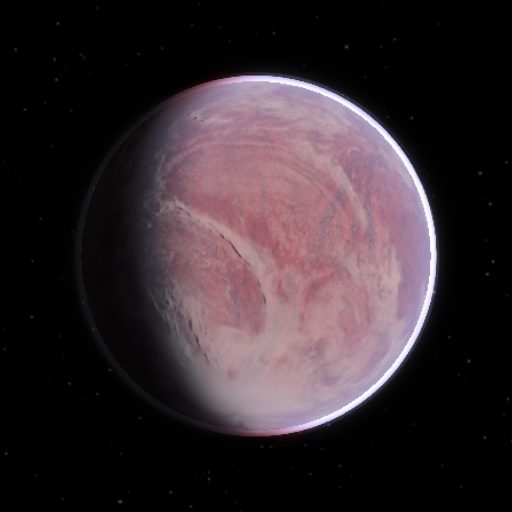
K2-72 d is about the size of Earth and is the second of four planets around K2-72, a red dwarf about 220 light-years away. Its letter does not match its position: planets are lettered in the order they were catalogued, and d happens to orbit between b and c. It passes in front of its star every 7.76 days.
NASA's K2 mission found the system by watching for the small, regular dips in starlight that planets cause as they cross their star. In 2016 a team led by Ian Crossfield validated all four as planets, using statistics and follow-up observations to rule out other explanations such as a background eclipsing star, and noted that their orbits sit near simple period ratios. A 2017 study led by Courtney Dressing re-measured the star with infrared spectroscopy and revised the planets' properties.
According to the NASA Exoplanet Archive, K2-72 d is about 1.01 times Earth's radius, the closest to Earth's size in the system. It receives about five times the light Earth gets from the Sun, so it is too hot for surface water. The archive's mass of about 1.0 Earth mass is an estimate from its size, not a measurement. Its equilibrium temperature, set by starlight alone, is estimated at about 420 kelvin.