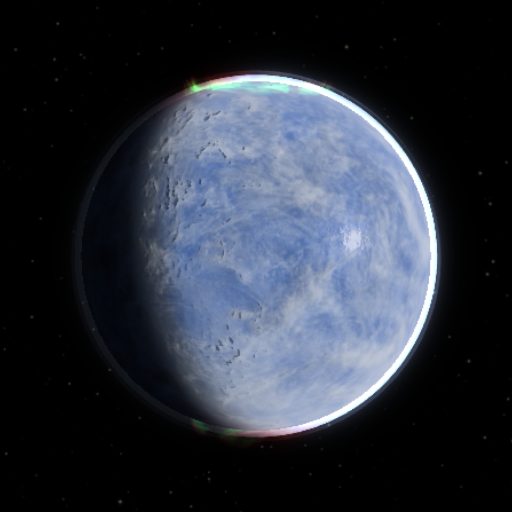
Kepler-1606 b is a planet about twice Earth's width orbiting a star a little cooler than the Sun about 2,700 light-years away. It crosses in front of its star every 196 days and was first listed as candidate KOI-4450.01.
A team led by Timothy Morton validated it in 2016 as one of 1,284 Kepler planets confirmed at once, using an automated method that estimates how likely each signal is to be a false alarm such as a background eclipsing pair of stars. In 2017 a team led by Guillermo Torres examined it again with a different statistical method, BLENDER, adding spectra and high-resolution images of the star. Most of the planets in their study reached 99.73 percent confidence; Kepler-1606 b was one of three validated at slightly lower confidence, about 99.46 percent, still very likely a real planet.
Torres's team calculated that it receives about 1.56 times the light Earth gets from the Sun, with an equilibrium temperature, set by starlight alone, of about 324 kelvin. That is more light than Earth receives. At about twice Earth's width, it could be a large rocky planet or one with a thick envelope of gas. Its mass has never been measured, so whether it is rocky is unknown.