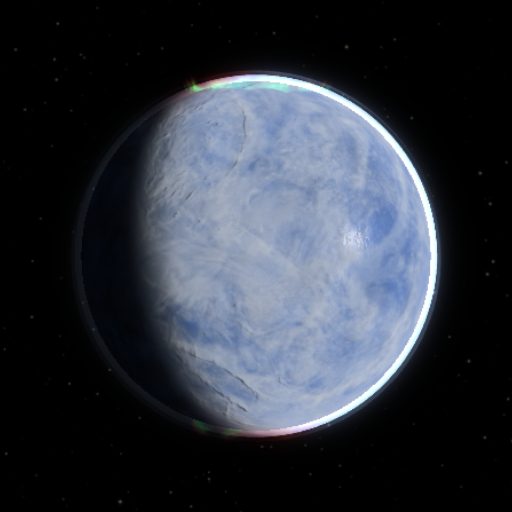
Kepler-1638 b is a planet about 1.9 times Earth's width orbiting a Sun-like star about 5,000 light-years away. It crosses in front of its star every 259 days, and Kepler caught each crossing as a long, shallow dip lasting nearly 16 hours.
NASA's Kepler space telescope listed it as candidate KOI-5856.01. A team led by Timothy Morton validated it in 2016, among 1,284 planets confirmed at once by an automated method that weighs each signal against false alarms. In 2017 a team led by Guillermo Torres examined it again with a different statistical method, BLENDER, along with spectra of the star, and validated it with about 99.97 percent confidence.
How much light it receives depends on how bright its star is, and estimates differ. Torres's team calculated about 1.2 times the light Earth gets from the Sun and an equilibrium temperature, set by starlight alone, of about 304 kelvin, and listed it among seven planets with a better than 50 percent chance of being both smaller than twice Earth's width and in the habitable zone. The NASA Exoplanet Archive's current figure is higher, about 2.8 times Earth's light, which would place it closer in than the habitable zone. Its mass has never been measured, so its makeup is unknown.