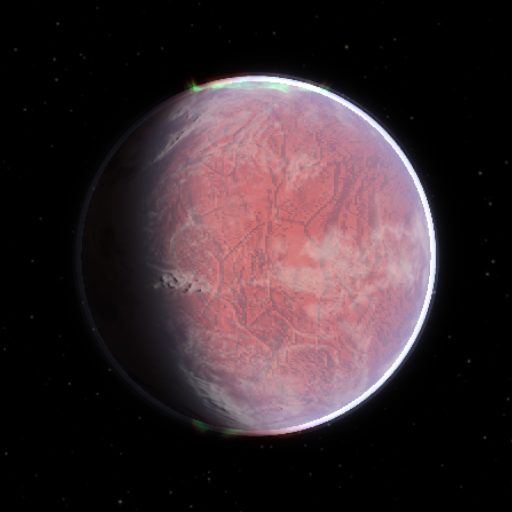
Kepler-186 e is the next planet in from Kepler-186 f, the first Earth-sized planet found in a star's habitable zone. Kepler-186 is a red dwarf about half the Sun's size, about 580 light-years away, with five known planets, all roughly the size of Earth. Kepler-186 e is about 1.3 times Earth's width and orbits every 22.4 days.
NASA's Kepler space telescope found all five by catching the small dips in starlight as each crossed the star. In 2014 a team led by Elisa Quintana announced the fifth and outermost, Kepler-186 f, and placed it in the habitable zone, the range of distances where liquid water could last on a surface.
Kepler-186 e shows how narrow that zone is. It is only a little closer to the star than f, but according to the NASA Exoplanet Archive it receives about 3.6 times the light Earth gets from the Sun, too much for liquid water, while f receives about a third. Its mass has not been measured; the archive's figure of about 2 Earth masses is an estimate from its size, so whether it is rocky is not known.