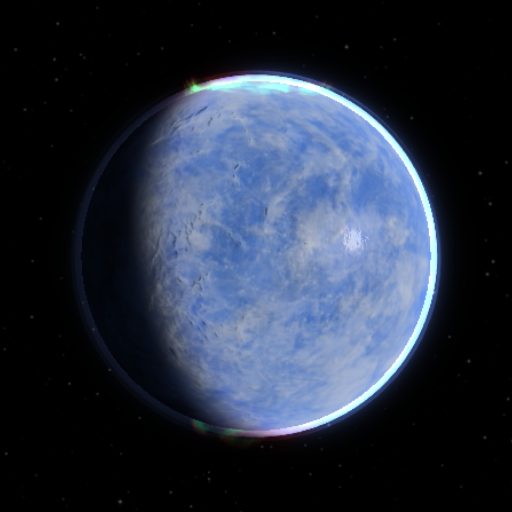
Kepler-443 b is a planet about 2.3 times Earth's width in the habitable zone of an orange dwarf star about 2,600 light-years away. The habitable zone is the range of distances where a planet could keep liquid water on its surface. Kepler-443 b crosses in front of its star every 177.7 days and receives about 86 percent of the light Earth gets from the Sun, according to the NASA Exoplanet Archive.
It was confirmed in 2015, as candidate KOI-4745.01, in a study led by Guillermo Torres that validated twelve small Kepler planets in habitable zones at once. The signals these planets produce in their stars' wobble are too small to measure, so the team showed statistically, with a method called BLENDER, that a planet explains each signal far better than any false alarm. They added spectra, adaptive optics images and speckle observations of the stars, and found all twelve to be in the habitable zone. Kepler-443 b was one of the planets given its name in that study.
Being in the habitable zone does not mean Kepler-443 b is Earth-like. At about 2.3 times Earth's width it is larger than most planets thought to be rocky and may have a thick envelope of gas; the team found nine of the twelve small enough to be rocky. Its mass has never been measured; the archive's figure of about 6 Earth masses is an estimate from its size. In 2016 a team led by David Armstrong included Kepler-443 in a study of the host stars of Kepler's most Earth-like planets, looking for flares and activity that could affect a planet's atmosphere.