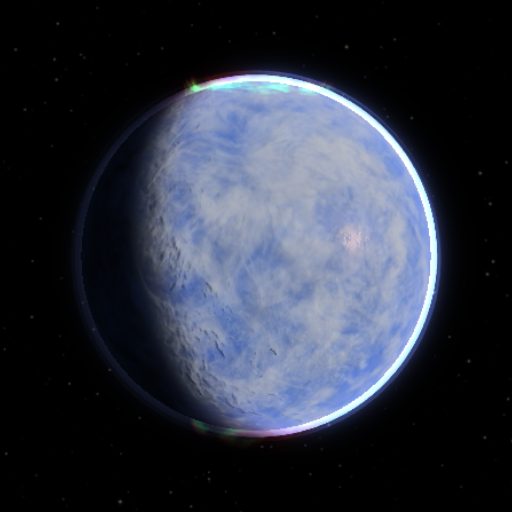
TOI-2094 b is a planet about 1.9 times Earth's width in the habitable zone of a red dwarf about 160 light-years away. The habitable zone is the range of distances where a planet could keep liquid water on its surface. TOI-2094 b crosses in front of its star every 18.79 days and receives about 98 percent of the light Earth gets from the Sun.
NASA's TESS satellite flagged it as a candidate from the small dips in starlight at each crossing. In 2025 a team led by Chengzi Jiang confirmed it as a planet with a technique called multicolour validation. They observed its transits in several colours of light at once, including with the HiPERCAM camera on the 10.4-metre Gran Telescopio Canarias. A planet blocks the same share of starlight at every colour, while many false alarms, such as a faint eclipsing star blended with the target, do not. That allowed them to rule out the alternatives without first measuring the planet's mass, a quicker way to sort promising habitable-zone candidates.
Being in the habitable zone does not make it Earth-like. Using statistical estimates of mass for a planet of its size, the team concluded that TOI-2094 b is more likely to be rich in volatile materials, a water world or a planet with a thick gas envelope, than rocky. They called it a benchmark temperate mini-Neptune and a strong target for the James Webb Space Telescope and future extremely large telescopes. Its mass has not yet been measured directly, and the team noted that a precise mass is needed before its atmosphere can be studied in detail.