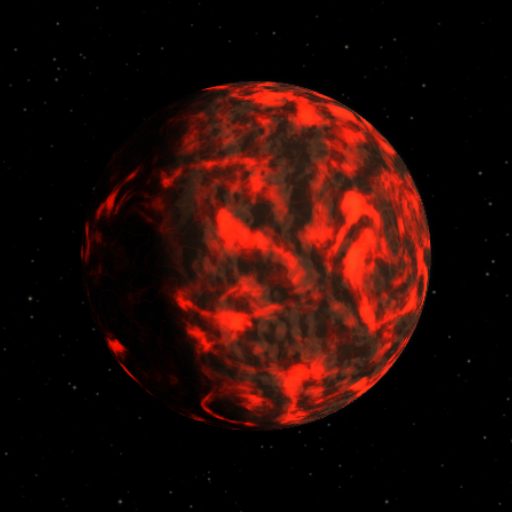
TOI-426 b is an extremely irradiated sub-Neptune, between Earth and Neptune in size, that circles its Sun-like star every 1.32 days and receives about 1,700 times the light Earth gets from the Sun. The star, also known as HD 34390, is about 370 light-years away. The planet is about 2.2 times Earth's width and about 6.7 times its mass.
NASA's TESS satellite found it crossing its star, and a team led by A. Castro-González confirmed it in 2026 with 147 measurements from the HARPS spectrograph, which weighed it from the slight wobble it gives its star. They also found a second, very different planet in the system: a giant on a 236-day orbit with a minimum mass of about 444 Earth masses, about 1.4 times Jupiter's.
The puzzle is how TOI-426 b survives. It sits near the lower edge of the so-called Neptunian desert, a region close to stars where planets of its size are rare, because intense starlight should strip away their gas. Yet its density shows it must hold a substantial share of light, volatile material. The team's models found that an envelope of hydrogen and helium would boil away in about 1 to 100 million years, but an envelope dominated by water would last 100 to 1,000 billion years, so they favour a steam world. They also found that planets like this one are unusually often accompanied by outer giants, which supports the idea that they arrived on stretched orbits that the star's tides then made circular.