Create your free account

Enter your email and we'll send a 6-digit code — no password needed.
We only keep your email and the username you choose. We never share or sell your email, and we don't send marketing — we use it only to email you a sign-in code. Read our privacy policy.
Planet profiles

YZ Cet b

Rocky Terrestrial · 12 light-years away · Last reviewed October 14, 2026

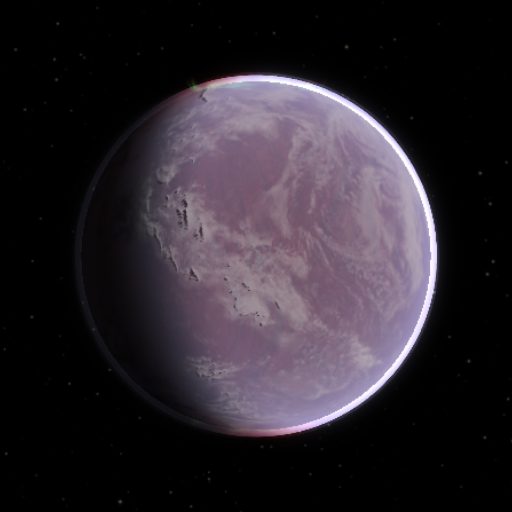
YZ Cet b rendered in TerraForge from its measured mass, orbit and star
TerraForge's rendering of YZ Cet b, generated by our physics engine from its measured mass, size, orbit and star. An illustration of what the science suggests, not a photograph.
TerraForge classification
Rocky Terrestrial
Host star
YZ Cet (M4.5 V)
Distance
12 light-years
Orbit
2.02 days
Mass
0.7 × Earth
Radius
0.91 × Earth
Discovered
2017, radial velocity

Figures from the NASA Exoplanet Archive. The classification is TerraForge’s, from its physics model.

YZ Ceti b may be the first planet beyond the solar system with a magnetic field detected through radio waves. It is the innermost of three Earth-mass planets around YZ Ceti, a small red dwarf about 12 light-years away, and orbits the star in about two days.

It was found together with its siblings YZ Ceti c and d in 2017 by a team led by N. Astudillo-Defru using the HARPS spectrograph in Chile. They used the radial velocity method, which detects the slight back-and-forth motion a planet's gravity gives its star. The planets' minimum masses were then among the lowest ever measured that way. Pinning down the orbits was hard, because the timing of the observations allowed more than one period to fit the data, a problem called aliasing. In 2020 a CARMENES team led by S. Stock added 229 new measurements and settled the question: YZ Ceti b orbits every 2.02 days, and its minimum mass is about 0.7 Earth masses.

Its radio story began in 2023. A team led by J. Sebastian Pineda detected bursts of radio waves from the star, two of them at similar points in YZ Ceti b's orbit. A separate team led by Corrado Trigilio, observing at lower frequencies with the Giant Metrewave Radio Telescope, also linked radio bursts to the planet's orbit. The idea is that the planet, orbiting inside the star's magnetic field, disturbs it and triggers the radio emission. Trigilio's team concluded the interaction is confirmed and that the planet must have its own magnetic field, which can help shield an atmosphere. Pineda's team was more cautious: they could not rule out ordinary activity on the star and called it a candidate. A 2025 study mapping the star's magnetic field found that it changes over just a few rotations, which matters for interpreting the signal. At two days from its star, YZ Ceti b is far too hot for liquid water.

Sources

  1. The HARPS search for southern extra-solar planets XLII. A system of Earth-mass planets around the nearby M dwarf YZ Ceti — arXiv (Astronomy & Astrophysics)
  2. The CARMENES search for exoplanets around M dwarfs. Characterization of the nearby ultra-compact multiplanetary system YZ Ceti — arXiv (Astronomy & Astrophysics)
  3. Coherent radio bursts from known M-dwarf planet host YZ Ceti — arXiv (Nature Astronomy)
  4. Star-Planet Interaction at radio wavelengths in YZ Ceti: Inferring planetary magnetic field — arXiv (The Astrophysical Journal Letters)
  5. Discovery of a rapidly evolving global magnetic field in the M-dwarf YZ Cet and constraints on the magnetic field of its planet YZ Cet b — arXiv
A banded gas giant with four moons in different colors: a yellow sulfur moon, two rust-red rock moons and a blue water moon

New: Choose What Your Moons Are Made Of 🌙

Every moon used to be grey rock, white ice or blue ocean, decided for you. Now each one has a "Made of" choice in the builder's Moons tab — silicate rock, iron, water ice, carbon, sulfur, or nitrogen and methane ice — and the physics decides what that becomes. Put water ice too close to the star and it boils off to bare rock. Put sulfur where a neighbouring moon keeps it tidally flexed and it erupts in Io's yellows. Give a Titan-sized moon nitrogen ice far from the sun and it wraps itself in haze. Hang a water moon about the mass of Earth off a giant planet in the habitable zone and it can hold air and open seas — scored for life on the same scale as a planet, with a day as long as its orbit. A tint slider nudges the colour, but only as far as that material could really go.

Create your free account

Enter your email and we'll send a 6-digit code — no password needed.
We only keep your email and the username you choose. We never share or sell your email, and we don't send marketing — we use it only to email you a sign-in code. Read our privacy policy.

Send feedback

We're still building out the best experience we can — and we'd love your input. Tell us about features you enjoy, ideas you'd like to see, or pain points where something feels off, and we'll know where to look next.

Type
Idea
Bug
Pain point
Other