Entering orbit…
AI assistant
Habitability
0/ 100
View planet
View star system
View surface
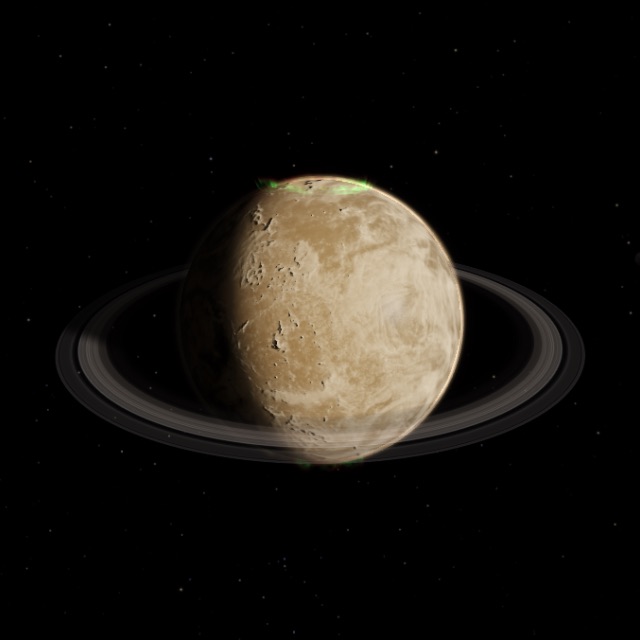
Areka
0
Venus Like
✦ Caloris-Adustus SystemMagnetic FieldModerate Activity
Why is this a Venus Like?Your planet has a thick CO₂ atmosphere creating a runaway greenhouse effect, with surface temperatures of 559K.
Venus-like planets experience runaway greenhouse warming where CO₂ traps heat, evaporating oceans and creating hostile conditions despite being in the habitable zone.
Classification Criteria:
✓ Temperature: 559K (500-800K range)✓ CO₂-rich atmosphere creating greenhouse effect
Habitability ScoreUninhabitable
Contributing Factors
water0
No water - the recipe has no hydrogen and oxygen to form it
geology90
Active geology recycles nutrients and drives carbon cycle
rotation10
Near tidally locked - one hemisphere perpetually scorched, other frozen, narrow habitable twilight zone only
Organic Chemistry20
Limited organic chemistry potential
atmosphere14
Dense CO₂ atmosphere with extreme greenhouse effect (partially stripped by slow rotation)
temperature15
Extremely hot - hostile to known life forms
magnetic Field100
Magnetic field provides radiation protection
Physical Properties
Mass
1.00x Earth (5.97e+24 kg)Radius
1.00x Earth (6,371 km)Surface Gravity
1.00x Earth (9.8 m/s²)Surface Temperature
559 K (286 °C / 546 °F)Rotation Period
24.0 hours/dayOrbital Environment
Star Type
G-type (Yellow (Sun-like))Distance from Star
0.54 AU (80.8 million km)Orbital Period
145 daysAtmosphere
Dense CO₂ atmosphere with sulfuric acid clouds, extreme greenhouse effect
Elemental Composition
C - Carbon
27.7%
O - Oxygen
18.5%
Si - Silicon
14.3%
Surface Characteristics
Rocky surface with volcanic plains, extreme pressure and heatClosest Real Exoplanet
K2-129 b86% similar
Orbiting K2-129| Yours | K2-129 b | |
|---|---|---|
| Mass | 1.00 × Earth | 1.12 × Earth |
| Radius | 1.02 × Earth | 1.04 × Earth |
| Density (composition) | 5.20 g/cm³ | 5.49 g/cm³ |
| Temperature | 558.9 K | 419.0 K |
| Starlight received | 3.43 × Earth | 4.50 × Earth |
| Star temperature | 5,600 K | 3,459 K |
Moons
Moon 1rings0.063% - 1.8 radii
Inside the Roche limit (2.80 planet radii): torn apart into a ring system.
Moon 2merged0.014% - 10.0 radii
Merged with an adjacent moon: too close for both to hold a stable orbit.
Moon 3stable0.0071% - 9.2 radii
Small and distant: a quiet, stable companion.
Tidal braking locked the planet to its moon: one face forever moonward.
Moon 4stable0.035% - 7.7 radii
Small and distant: a quiet, stable companion.