Entering orbit…
AI assistant
Habitability
0/ 100
View planet
View star system
View surface
df-1a
0
Venus Like
✦ df-1Magnetic FieldModerate Activity
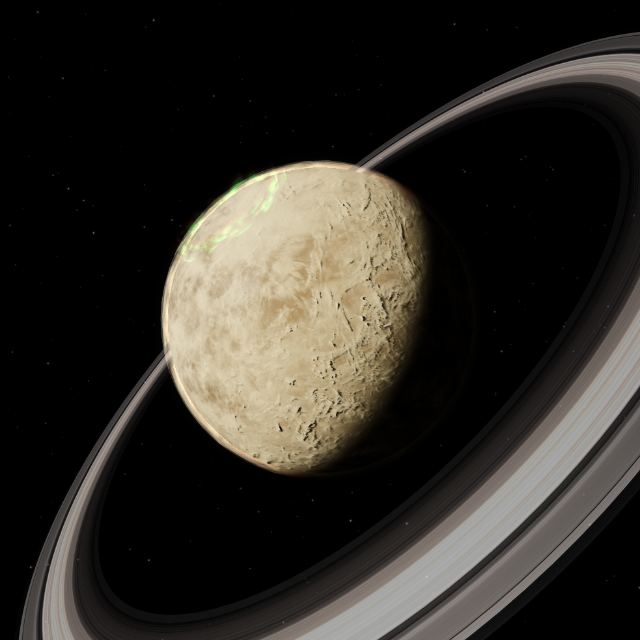
Why is this a Venus Like?Your planet has a thick CO₂ atmosphere creating a runaway greenhouse effect, with surface temperatures of 627K.
Venus-like planets experience runaway greenhouse warming where CO₂ traps heat, evaporating oceans and creating hostile conditions despite being in the habitable zone.
Classification Criteria:
✓ Temperature: 627K (500-800K range)✓ CO₂-rich atmosphere creating greenhouse effect
Habitability ScoreUninhabitable
Contributing Factors
water0
No water - the recipe has no hydrogen and oxygen to form it
geology90
Active geology recycles nutrients and drives carbon cycle
rotation100
Optimal rotation period - balanced day/night cycle, moderate weather, and good heat distribution
Organic Chemistry20
Limited organic chemistry potential
atmosphere35
Dense CO₂ atmosphere with extreme greenhouse effect
temperature5
Scorching - hot enough to melt lead, though rock stays solid; no chance for life (strong seasons from a 51° tilt: −4% habitability)
magnetic Field100
Magnetic field provides radiation protection
Physical Properties
Mass
1.00x Earth (5.97e+24 kg)Radius
1.00x Earth (6,371 km)Surface Gravity
1.00x Earth (9.8 m/s²)Surface Temperature
627 K (353 °C / 668 °F)Rotation Period
24.0 hours/dayOrbital Environment
Star Type
G-type (Yellow (Sun-like))Distance from Star
0.48 AU (71.8 million km)Orbital Period
121 daysAtmosphere
Dense CO₂ atmosphere with sulfuric acid clouds, extreme greenhouse effect
Elemental Composition
C - Carbon
33.3%
O - Oxygen
20.0%
He - Helium
16.7%
Surface Characteristics
Rocky surface with volcanic plains, extreme pressure and heatClosest Real Exoplanet
K2-239 c86% similar
Orbiting K2-239| Yours | K2-239 c | |
|---|---|---|
| Mass | 1.00 × Earth | 0.97 × Earth |
| Radius | 1.02 × Earth | 1.00 × Earth |
| Density (composition) | 5.20 g/cm³ | 5.36 g/cm³ |
| Temperature | 626.5 K | 427.0 K |
| Starlight received | 4.34 × Earth | 4.82 × Earth |
| Star temperature | 5,600 K | 3,420 K |
Moons
Moon 1rings0.20% - 2.8 radii
Inside the Roche limit (2.80 planet radii): torn apart into a ring system.