Entering orbit…
AI assistant
Habitability
83/ 100
View planet
View star system
View surface
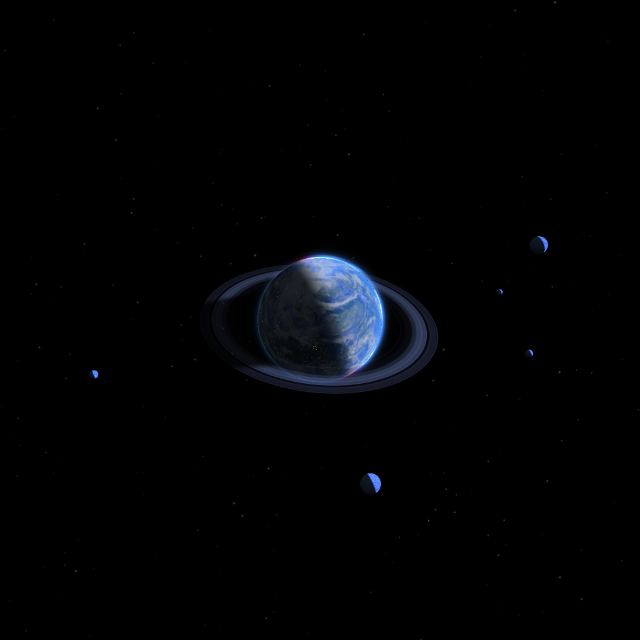
Vabport
- Mass
- 4.10 × Earth
- Radius
- 1.60 × Earth
- Gravity
- 1.60 g
- Surface
- 285 K
- Year
- 1,326 years
- Day
- 24.0 hrs
- Mass
- 4.10 × Earth
- Radius
- 1.60 × Earth
- Gravity
- 1.60 g
- Surface
- 285 K
- Year
- 1,326 years
- Day
- 24.0 hrs
Habitable zone
Star and planets drawn to scale (a typical star of its class), with only the star's edge in view. Orbits spaced as in the star system view.
Vabport's moons
5 moons
Moon 1Ice · 372,200 km
Moon 4Ice · 792,600 km
Moon 5Ice · 85,600 km
Moon 6Ice · 144,700 km
Moon 7Ice · 130,200 km
Planet, moons and orbits drawn to one scale; the smallest moons are enlarged so they can be seen.
A dyson sphere constructed around a white dwarf star
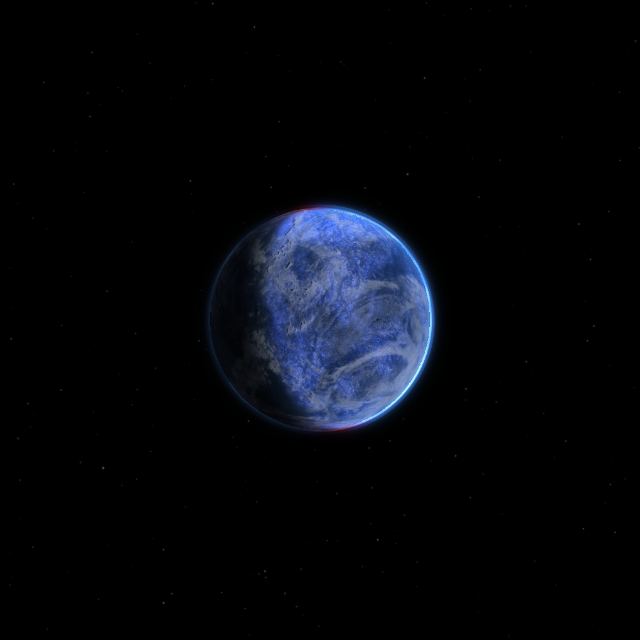
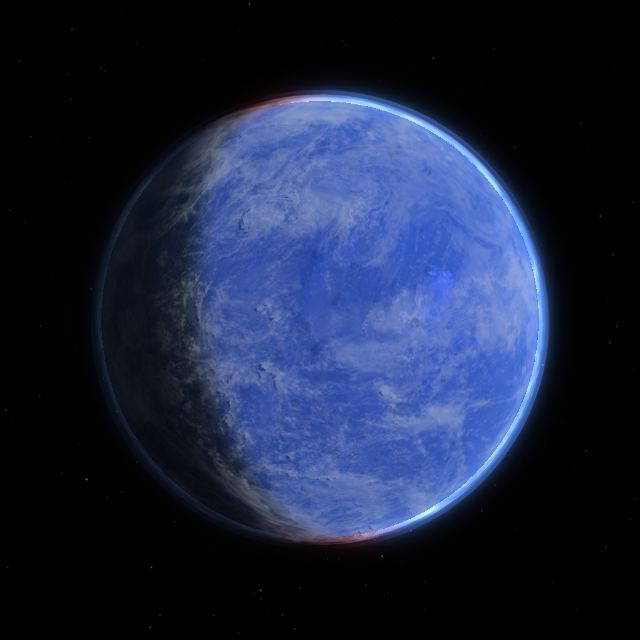
Surface. Rocky surface with continents, oceans, and active plate tectonics. Diverse biomes if life present.
✓ Conditions could support life. This planet’s modelled conditions could support biological processes: stable temperatures, liquid water and the chemistry life as we know it needs. That makes life possible, not present.
Earth Like
✦ Liviyen
Your planet has a balanced composition with all CHNOPS elements, proper mass (4.1x Earth), and sits in the habitable zone at 375.10 AU.Life possibleMagnetic FieldModerate Activity
Earth-like planets have the perfect combination of composition, temperature, mass, and magnetic field to potentially support complex life as we know it.
Classification Criteria:
✓ All CHNOPS elements present (C, H, N, O, P, S)✓ Mass: 4.1x Earth (0.5-2.0x range)✓ Temperature: 285K (250-320K range)✓ Magnetic field present✓ Distance: 375.10 AU (habitable zone)
Habitability ScoreHighly Habitable
Contributing Factors
water50
Limited water content
geology90
Active geology recycles nutrients and drives carbon cycle
rotation100
Optimal rotation period - balanced day/night cycle, moderate weather, and good heat distribution
Organic Chemistry84
Core organic elements (CHNO) present (tidal pools cycle wet and dry - a boost for prebiotic chemistry)
atmosphere100
Nitrogen-oxygen atmosphere with trace CO₂, water vapor, and argon
Nitrogen-oxygen atmosphere - breathable and protectivetemperature100
Optimal temperature range for liquid water and life
magnetic Field100
Magnetic field provides radiation protection
Physical Properties
Mass
4.10x Earth (2.45e+25 kg)Radius
1.60x Earth (10,197 km)Surface Gravity
1.60x Earth (15.7 m/s²)Surface Temperature
285 K (12 °C / 53 °F)Rotation Period
24.0 hours/dayElemental Composition
Closest Real Exoplanet
Kepler-452 b66% similar
Orbiting Kepler-452| Yours | Kepler-452 b | |
|---|---|---|
| Mass | 4.10 × Earth | 3.29 × Earth |
| Radius | 1.46 × Earth | 1.63 × Earth |
| Density (composition) | 7.19 g/cm³ | 4.19 g/cm³ |
| Temperature | 284.9 K | 265.0 K |
| Starlight received | 0.71 × Earth | 1.10 × Earth |
| Star temperature | 35,000 K | 5,757 K |
Moons
Moon 1receding
Outside the synchronous orbit: slowly receding, like Luna (~cm per year).
Moon 2merged
Merged with an adjacent moon: too close for both to hold a stable orbit.
Moon 3rings
Inside the Roche limit (2.80 planet radii): torn apart into a ring system.
Moon 4receding
Outside the synchronous orbit: slowly receding, like Luna (~cm per year).
Moon 5stable
Small and distant: a quiet, stable companion.
Moon 6stable
Small and distant: a quiet, stable companion.
Moon 7stable
Small and distant: a quiet, stable companion.
+4 chemistry: tidal pools cycle wet and dry - a boost for prebiotic chemistry