Entering orbit…
AI assistant
Habitability
0/ 100
View planet
View star system
View surface
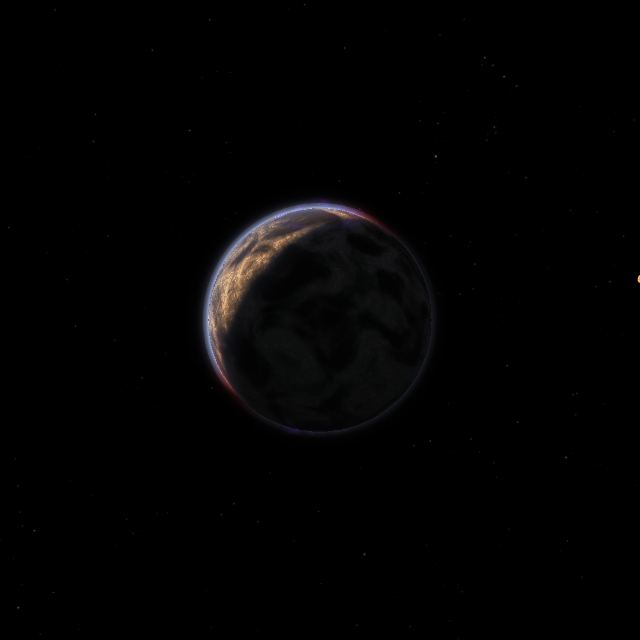
Sacadia
- Mass
- 0.50 × Earth
- Radius
- 0.79 × Earth
- Gravity
- 0.79 g
- Surface
- 635 K
- Year
- 4.2 years
- Day
- 15.0 hrs
- Mass
- 0.50 × Earth
- Radius
- 0.79 × Earth
- Gravity
- 0.79 g
- Surface
- 635 K
- Year
- 4.2 years
- Day
- 15.0 hrs
Sacadia5.57 AURocky TerrestrialYou are here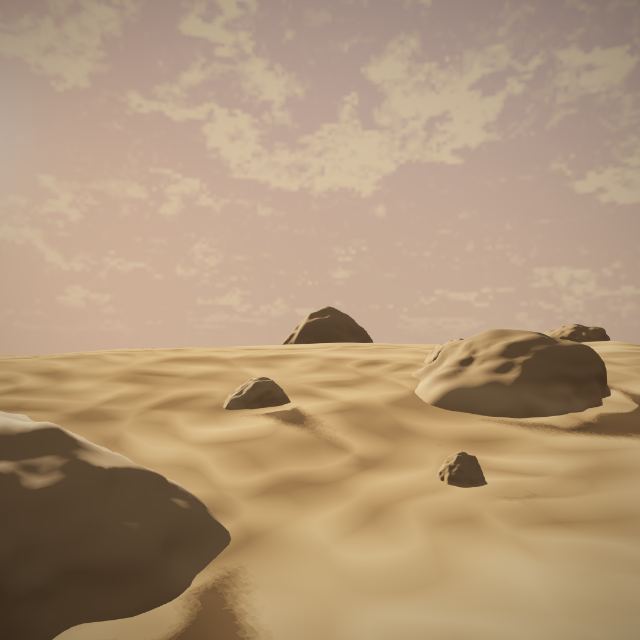
Habitable zone
Star and planets drawn to scale (a typical star of its class), with only the star's edge in view. Orbits spaced as in the star system view.
Sacadia's moons
3 moons
Moon 1Rock · 505,700 km
Moon 3Rock · 58,200 km
Moon 5Rock · 116,300 km
Planet, moons and orbits drawn to one scale; the smallest moons are enlarged so they can be seen.
Surface. Rocky surface with impact craters, possible volcanic features
Rocky Terrestrial
✦ Hynix-A
Your planet is dominated by silicate (23.3%) and iron (23.3%) content, forming a rocky terrestrial body.Magnetic FieldLow Activity
Rocky terrestrial planets are primarily composed of silicate rocks and metals. They're the most common type of small planet in the universe.
Classification Criteria:
✓ Silicon: 23.3% + Iron: 23.3% + Magnesium: 0.0%✓ Mass: 0.5x Earth (terrestrial range)
Habitability ScoreUninhabitable
Contributing Factors
water0
No water - the recipe has no hydrogen and oxygen to form it
geology70
Some geological activity provides slow nutrient cycling (tidal flexing sustains geologic activity)
rotation10
Near tidally locked - one hemisphere perpetually scorched, other frozen, narrow habitable twilight zone only
Organic Chemistry54
Carbon and hydrogen present - organic chemistry possible (tidal pools cycle wet and dry - a boost for prebiotic chemistry)
atmosphere28
Thin nitrogen atmosphere
Nitrogen atmosphere provides protection but not breathable (partially stripped by slow rotation)temperature10
Scorching - hot enough to melt lead, though rock stays solid; no chance for life (large moon stabilizes the axial tilt - steady seasons)
magnetic Field100
Magnetic field provides radiation protection
Physical Properties
Mass
0.50x Earth (2.99e+24 kg)Radius
0.79x Earth (5,057 km)Surface Gravity
0.79x Earth (7.8 m/s²)Surface Temperature
635 K (362 °C / 683 °F)Rotation Period
15.0 hours/day (faster than Earth)Elemental Composition
Closest Real Exoplanet
Kepler-388 c90% similar
Orbiting Kepler-388| Yours | Kepler-388 c | |
|---|---|---|
| Mass | 0.50 × Earth | 0.57 × Earth |
| Radius | 0.84 × Earth | 0.86 × Earth |
| Density (composition) | 4.65 g/cm³ | 4.90 g/cm³ |
| Temperature | 634.9 K | 515.0 K |
| Starlight received | 12.9 × Earth | 16.6 × Earth |
| Star temperature | — | 4,498 K |
Moons
Moon 1stable
Small and distant: a quiet, stable companion.
Tidal braking locked the planet to its moon: one face forever moonward.
Moon 2merged
Merged with an adjacent moon: too close for both to hold a stable orbit.
Moon 3receding
Outside the synchronous orbit: slowly receding, like Luna (~cm per year).
Moon 4merged
Merged with an adjacent moon: too close for both to hold a stable orbit.
Moon 5receding
Outside the synchronous orbit: slowly receding, like Luna (~cm per year).
Moon 6merged
Merged with an adjacent moon: too close for both to hold a stable orbit.
Moon 7merged
Merged with an adjacent moon: too close for both to hold a stable orbit.
+5 temperature: large moon stabilizes the axial tilt - steady seasons+10 geology: tidal flexing sustains geologic activity+4 chemistry: tidal pools cycle wet and dry - a boost for prebiotic chemistry