Entering orbit…
AI assistant
Habitability
0/ 100
View planet
View star system
View surface
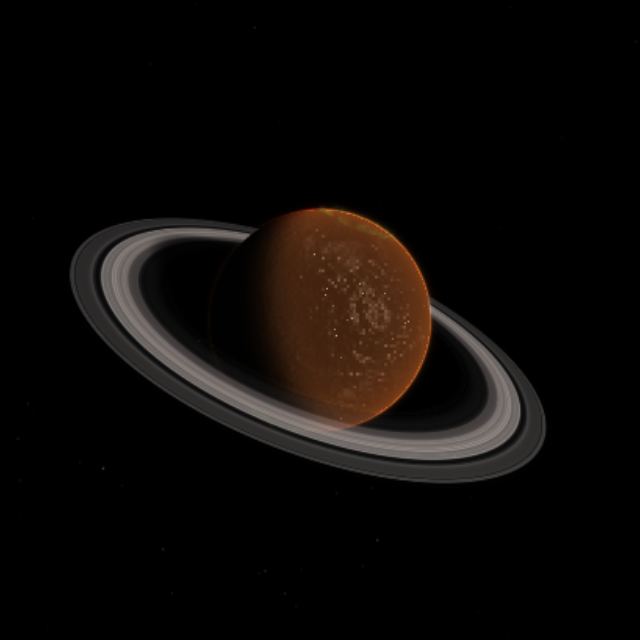
Umbra VII
0
Carbon World
Magnetic FieldLow Activity
Why is this a Carbon World?Your planet's carbon (87.5%) outweighs its oxygen (12.5%), so the mineralogy flips from silicate rock to carbide - a graphite crust over a diamond mantle.
Carbon worlds form in carbon-rich disks where there isn't enough oxygen to bind it all into silicates. Instead carbon condenses directly into graphite, carbides, and - under pressure at depth - diamond. They form water-poor, so no life takes hold.
Classification Criteria:
✓ Carbon: 87.5% (>=20% required)✓ Carbon exceeds Oxygen: 87.5% > 12.5%✓ Mass: 0.5x Earth (<=8x hycean ceiling)
Habitability ScoreUninhabitable
Contributing Factors
water0
No water - the recipe has no hydrogen and oxygen to form it
geology60
Some geological activity provides slow nutrient cycling
rotation65
Slow rotation - significant day/night temperature variations, but life can adapt
Organic Chemistry20
Limited organic chemistry potential
atmosphere40
Atmosphere present but composition not ideal for life
temperature100
Optimal temperature range for liquid water and life (large moon stabilizes the axial tilt - steady seasons)
magnetic Field100
Magnetic field provides radiation protection
Physical Properties
Mass
0.50x Earth (2.99e+24 kg)Radius
0.79x Earth (5,057 km)Surface Gravity
0.79x Earth (7.8 m/s²)Surface Temperature
310 K (37 °C / 98 °F)Rotation Period
6.0 hours/day (faster than Earth)Orbital Environment
Star Type
G-type (Yellow (Sun-like))Distance from Star
1.00 AU (150 million km)Orbital Period
1.00 yearsAtmosphere
Carbon monoxide and methane haze over a graphite surface
Elemental Composition
C - Carbon
87.5%
O - Oxygen
12.5%
Surface Characteristics
Graphite plains and carbide ridges over a diamond mantle - a glittering coal-black worldClosest Real Exoplanet
Kepler-138 e83% similar
Orbiting Kepler-138| Yours | Kepler-138 e | |
|---|---|---|
| Mass | 0.50 × Earth | 0.43 × Earth |
| Radius | 0.93 × Earth | 0.80 × Earth |
| Density (composition) | 3.42 g/cm³ | 4.68 g/cm³ |
| Temperature | 309.9 K | 292.0 K |
| Starlight received | 1.00 × Earth | 1.73 × Earth |
| Star temperature | 5,600 K | 3,841 K |
Moons
Moon 1rings0.40% - 2.3 radii
Inside the Roche limit (2.80 planet radii): torn apart into a ring system.
Moon 2recedingCarbon-rich1.6% - 54.5 radii
Outside the synchronous orbit: slowly receding, like Luna (~cm per year).