Entering orbit…
AI assistant
Habitability
0/ 100
View planet
View star system
View surface
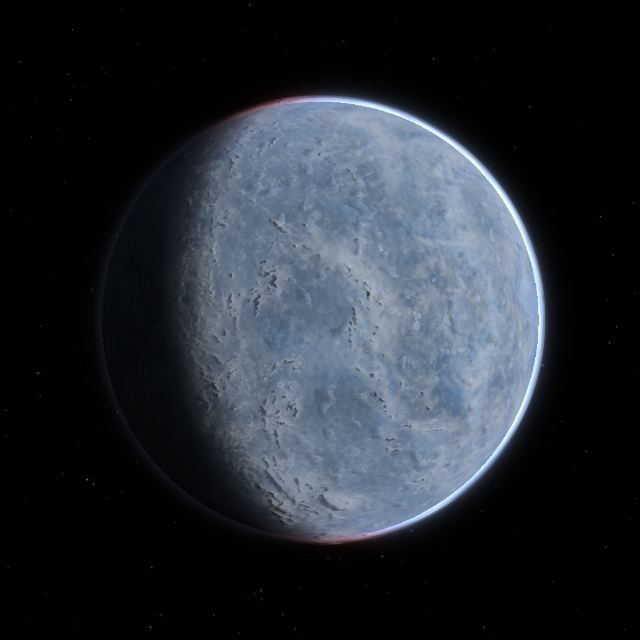
Fentiang
0
At the far edges of Keryat's system, here lies Fentiang, nontheless, a friend in this otherwise wretched galaxy.
Ice World
✦ Peryat SystemNo life — too cold for liquid waterMagnetic FieldLow Activity
Why is this a Ice World?Your planet orbits at 150.00 AU from its star, resulting in frigid temperatures of 24K.
Ice worlds form beyond the frost line where temperatures are low enough for water and other volatiles to freeze solid. They may have subsurface oceans beneath thick ice shells.
Classification Criteria:
✓ Distance: 150.00 AU (>3 AU) or Temperature <200K✓ Temperature: 24K✓ Water content: 38.5% for ice formation
Habitability ScoreUninhabitable
Contributing Factors
water22
Abundant water - frozen solid, no liquid phase at this temperature
geology60
Some geological activity provides slow nutrient cycling
rotation100
Optimal rotation period - balanced day/night cycle, moderate weather, and good heat distribution
Organic Chemistry100
All CHNOPS elements present - building blocks of life
atmosphere70
Nitrogen atmosphere provides protection but not breathable
temperature0
Near absolute zero - all molecular activity ceases, impossible for life (extreme seasons: at 75° the poles swing between months-long day and night: −16% habitability)
magnetic Field100
Magnetic field provides radiation protection
Physical Properties
Mass
3.50x Earth (2.09e+25 kg)Radius
1.52x Earth (9,673 km)Surface Gravity
1.52x Earth (14.9 m/s²)Surface Temperature
24 K (-249 °C / -417 °F)Rotation Period
40.0 hours/day (slower than Earth)Orbital Environment
Star Type
G-type (Yellow (Sun-like))Distance from Star
150.00 AU (22.4 billion km)Orbital Period
1,837 yearsAtmosphere
Thin nitrogen and methane atmosphere
Elemental Composition
H - Hydrogen
28.2%
O - Oxygen
24.4%
Si - Silicon
14.1%
Surface Characteristics
Frozen surface covered in water ice, possible subsurface ocean if tidal heating presentClosest Real Exoplanet
KMT-2021-BLG-0171L b49% similar
Orbiting KMT-2021-BLG-0171L| Yours | KMT-2021-BLG-0171L b | |
|---|---|---|
| Mass | 3.50 × Earth | 11.2 × Earth |
| Radius | 1.86 × Earth | 3.35 × Earth |
| Density (composition) | 3.00 g/cm³ | 1.64 g/cm³ |
| Temperature | 23.7 K | — |
| Starlight received | 0.00 × Earth | — |
| Star temperature | 5,600 K | 5,200 K |