Entering orbit…
AI assistant
Habitability
17/ 100
View planet
View star system
View surface
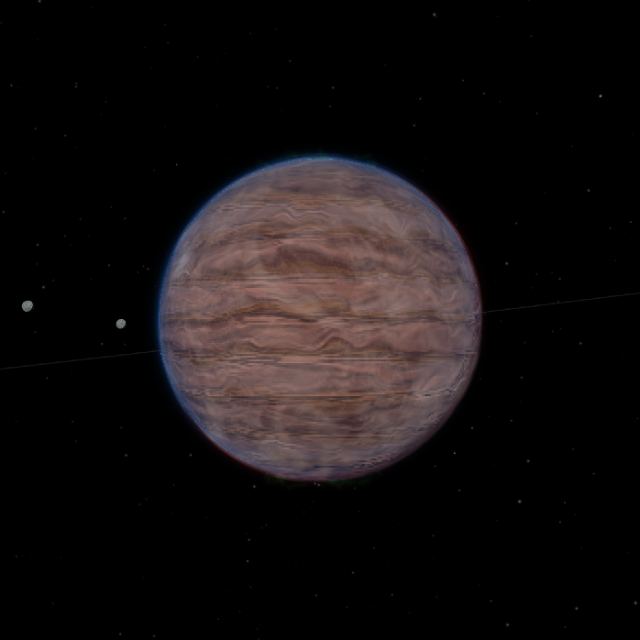
Chrysos
- Mass
- 5.80 × Earth
- Radius
- 1.80 × Earth
- Gravity
- 1.80 g
- Surface
- 167 K
- Year
- 9.3 years
- Day
- 11.0 hrs
- Mass
- 5.80 × Earth
- Radius
- 1.80 × Earth
- Gravity
- 1.80 g
- Surface
- 167 K
- Year
- 9.3 years
- Day
- 11.0 hrs
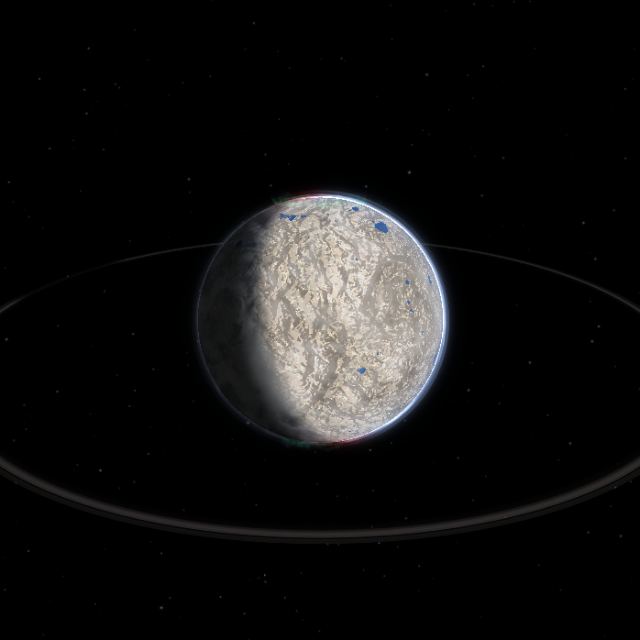
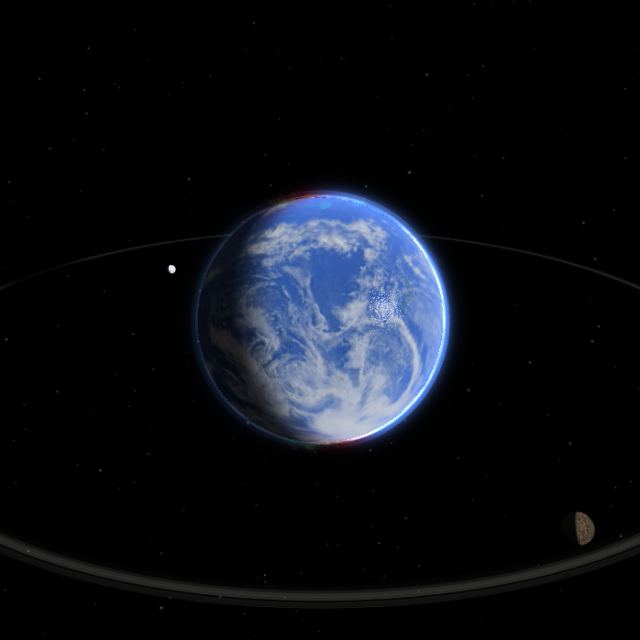
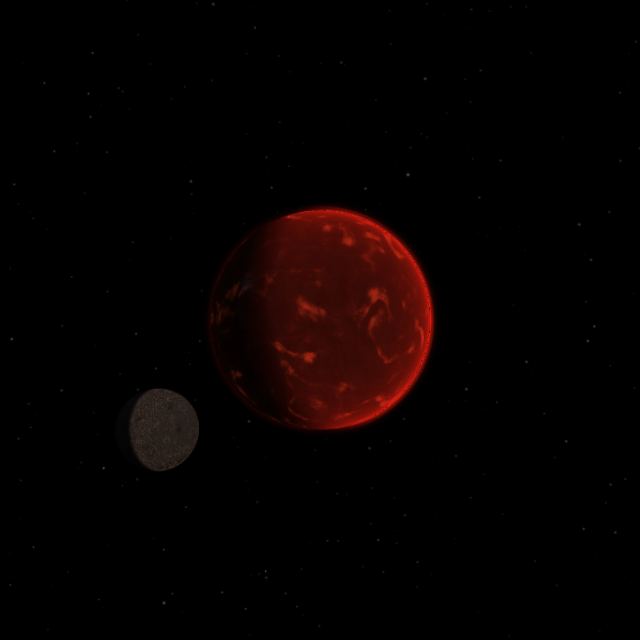 Chrysos4.43 AUIce GiantYou are here
Habitable zone
Star and planets drawn to scale (a typical star of its class), with only the star's edge in view. Orbits spaced as in the star system view.
Chrysos's moons
6 moons · life may exist on a moon
Moon 2Ice · 148,800 km
Moon 3Ice · 226,600 km
Moon 4Ocean · 92,100 km
Moon 5Ice · 345,700 km
Moon 6Ice · 525,400 km
Moon 7Ice · 799,000 km
Planet, moons and orbits drawn to one scale; the smallest moons are enlarged so they can be seen.
An ice giant world with six solid moons and rings; the fourth listed moon, Thalupeia, is a life-bearing ocean world heated by tidal forces.
Surface. Icy mantle surrounding rocky core, with hydrogen-helium atmosphere
Ice Giant
✦ Akaish
Your planet has moderate mass (5.8x Earth) with significant water, carbon, and nitrogen content, characteristic of ice giants.Life unlikely — too cold for liquid waterMagnetic FieldModerate Activity
Ice giants like Uranus and Neptune have icy interiors with thick atmospheres of hydrogen and helium, but not enough to be classified as gas giants.
Classification Criteria:
✓ Mass: 5.8x Earth (5-20x range)✓ Water/Carbon/Nitrogen rich composition
Habitability ScoreUninhabitable
Contributing Factors
water15
No solid surface — any water is locked in a supercritical mantle and hot ice, not oceans
geology100
Active geology recycles nutrients and drives carbon cycle (tidal flexing sustains geologic activity)
rotation10
Near tidally locked - one hemisphere perpetually scorched, other frozen, narrow habitable twilight zone only
Organic Chemistry100
All CHNOPS elements present - building blocks of life (tidal pools cycle wet and dry - a boost for prebiotic chemistry)
atmosphere12
Hydrogen and helium with water, methane, and ammonia ices
Hydrogen-rich atmosphere typical of gas giants (partially stripped by slow rotation)temperature20
Very cold - water frozen, challenging for life
magnetic Field100
Magnetic field provides radiation protection
Physical Properties
Mass
5.80x Earth (3.46e+25 kg)Radius
1.80x Earth (11,447 km)Surface Gravity
1.80x Earth (17.6 m/s²)Surface Temperature
167 K (-107 °C / -160 °F)Rotation Period
11.0 hours/day (faster than Earth)Elemental Composition
Closest Real Exoplanet
Wolf 1061 d84% similar
Orbiting Wolf 1061| Yours | Wolf 1061 d | |
|---|---|---|
| Mass | 5.80 × Earth | 7.70 × Earth |
| Radius | 2.71 × Earth | 2.69 × Earth |
| Density (composition) | 1.60 g/cm³ | 2.18 g/cm³ |
| Temperature | 166.6 K | 130.0 K |
| Starlight received | 0.05 × Earth | 0.06 × Earth |
| Star temperature | 5,600 K | 3,342 K |
MoonsLife may exist on a moon
Moon 1rings
Inside the synchronous orbit: it spiraled inward and was torn apart at the Roche limit (Phobos's fate).
Moon 2stable
Small and distant: a quiet, stable companion.
Tidal braking locked the planet to its moon: one face forever moonward.
Moon 3stable
Small and distant: a quiet, stable companion.
Moon 4recedingOcean world - life possible
Outside the synchronous orbit: slowly receding, like Luna (~cm per year).
Tidal heat sustains a subsurface ocean over a rock seafloor: a strong candidate for life (Europa-like, 78/100).
Moon 5stable
Small and distant: a quiet, stable companion.
Moon 6stable
Small and distant: a quiet, stable companion.
Moon 7stable
Small and distant: a quiet, stable companion.
+10 geology: tidal flexing sustains geologic activity+4 chemistry: tidal pools cycle wet and dry - a boost for prebiotic chemistry