Entering orbit…
AI assistant
Habitability
0/ 100
View planet
View star system
View surface
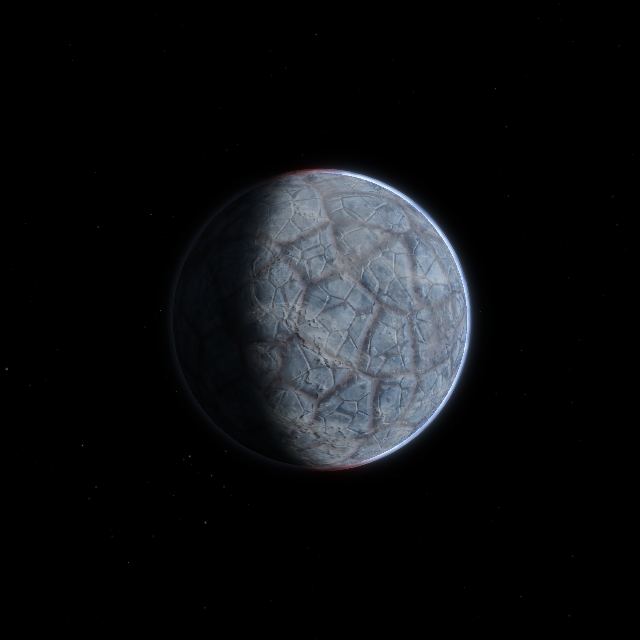
Etoni
0
Ice World
✦ Phirrian systemMagnetic FieldLow Activity
Why is this a Ice World?Your planet orbits at 84.70 AU from its star, resulting in frigid temperatures of 30K.
Ice worlds form beyond the frost line where temperatures are low enough for water and other volatiles to freeze solid. They may have subsurface oceans beneath thick ice shells.
Classification Criteria:
✓ Distance: 84.70 AU (>3 AU) or Temperature <200K✓ Temperature: 30K✓ Water content: 49.5% for ice formation
Habitability ScoreUninhabitable
Contributing Factors
water22
Abundant water - frozen solid, no liquid phase at this temperature
geology60
Some geological activity provides slow nutrient cycling
rotation30
Very slow rotation - severe temperature swings between eternal day and night sides
Organic Chemistry54
Carbon and hydrogen present - organic chemistry possible (tidal pools cycle wet and dry - a boost for prebiotic chemistry)
atmosphere42
Nitrogen atmosphere provides protection but not breathable (partially stripped by slow rotation)
temperature0
Near absolute zero - all molecular activity ceases, impossible for life
magnetic Field100
Magnetic field provides radiation protection
Physical Properties
Mass
1.00x Earth (5.97e+24 kg)Radius
1.00x Earth (6,371 km)Surface Gravity
1.00x Earth (9.8 m/s²)Surface Temperature
30 K (-243 °C / -405 °F)Rotation Period
24.0 hours/dayOrbital Environment
Star Type
G-type (Yellow (Sun-like))Distance from Star
84.70 AU (12.7 billion km)Orbital Period
779.5 yearsAtmosphere
Thin nitrogen and methane atmosphere
Elemental Composition
O - Oxygen
39.6%
H - Hydrogen
19.8%
S - Sulfur
9.9%
Surface Characteristics
Frozen surface covered in water ice, possible subsurface ocean if tidal heating presentClosest Real Exoplanet
No close real-world analog — your planet is one of a kind among the confirmed exoplanets in the NASA Exoplanet Archive.Browse all 5,568 real exoplanetsLearn more about exoplanetsMoons
Moon 1stable0.010% - 7.5 radii
Small and distant: a quiet, stable companion.