Entering orbit…
AI assistant
Habitability
3/ 100
View planet
View star system
View surface
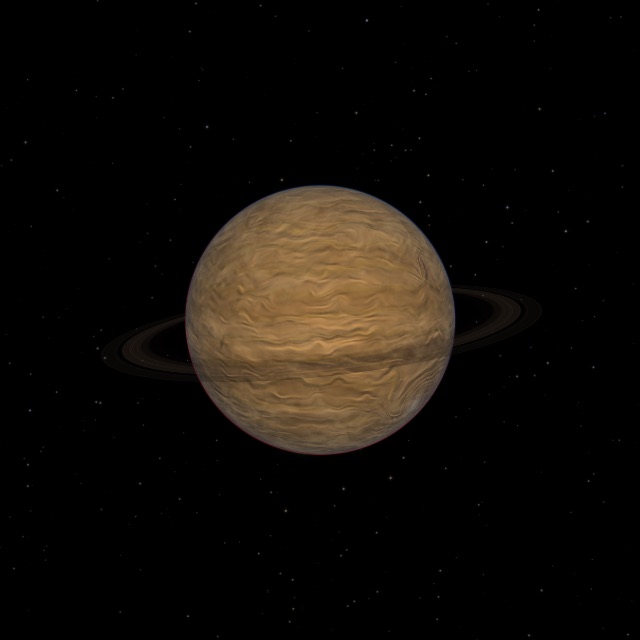
So-h F
- Mass
- 317.00 × Earth
- Radius
- 6.82 × Earth
- Gravity
- 6.82 g
- Surface
- 56 K
- Year
- 72.2 years
- Day
- 12.0 hrs
- Mass
- 317.00 × Earth
- Radius
- 6.82 × Earth
- Gravity
- 6.82 g
- Surface
- 56 K
- Year
- 72.2 years
- Day
- 12.0 hrs
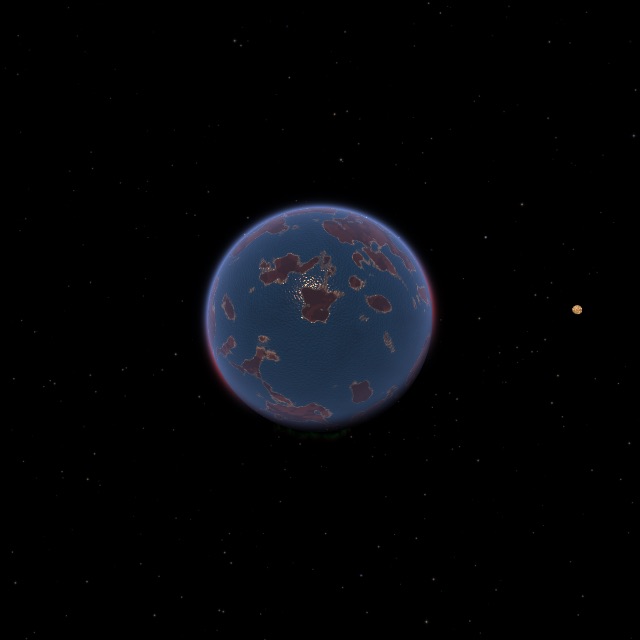
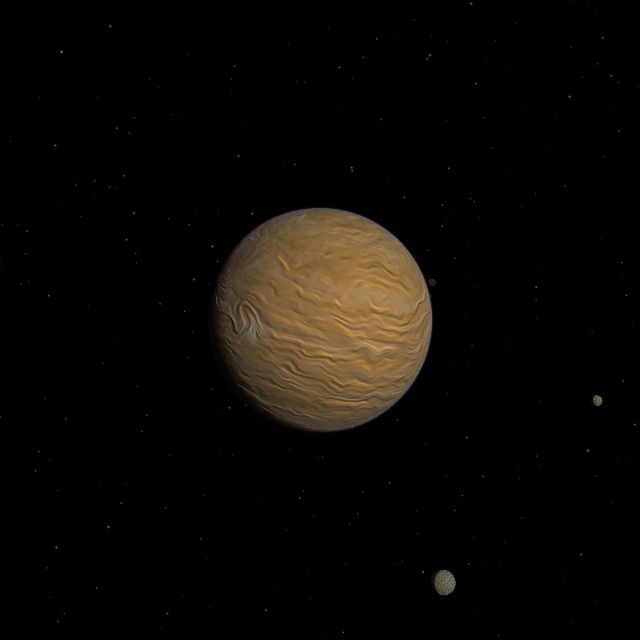 So-h F15.40 AUGas GiantYou are here
Habitable zone
Star and planets drawn to scale (a typical star of its class), with only the star's edge in view. Orbits spaced as in the star system view.
So-h F's moons
3 moons
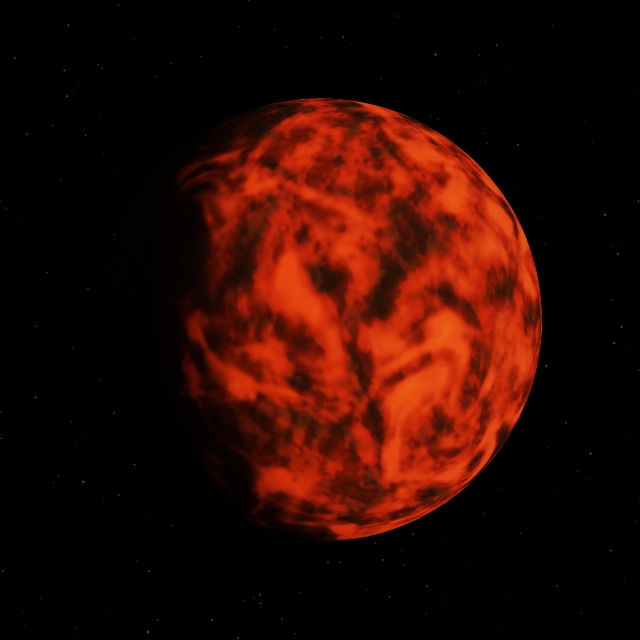
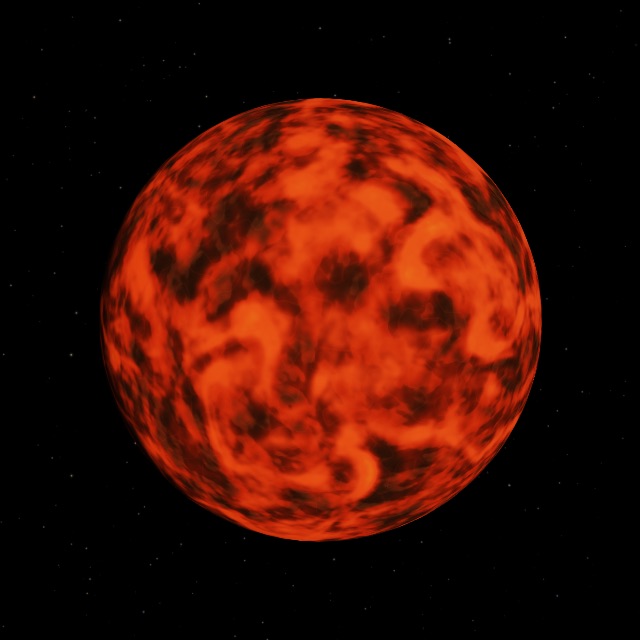
Moon 2Volcanic · 191,100 km
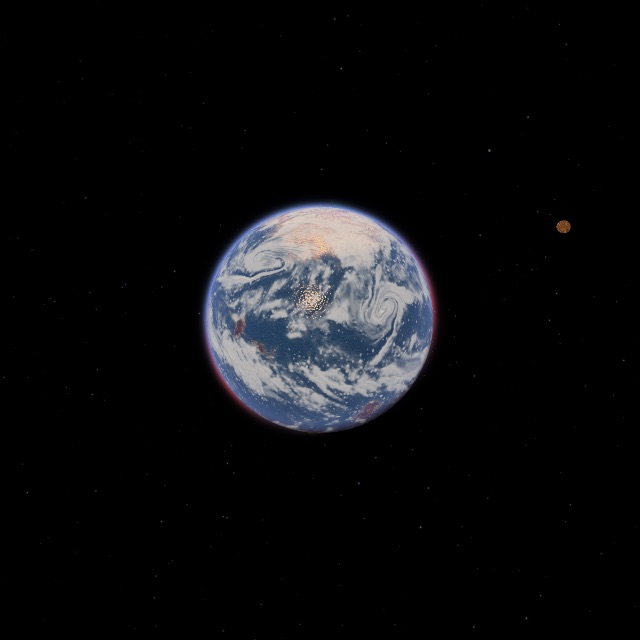
Moon 3Ocean · 330,100 km
Moon 4Nitrogen ice · 499,600 km
Planet, moons and orbits drawn to one scale; the smallest moons are enlarged so they can be seen.
Surface. No solid surface - thick gaseous envelope with possible rocky core deep within
Gas Giant
✦ So-h
Your planet has 50.0% hydrogen and helium, combined with a mass of 317.0x Earth, which exceeds the gas giant threshold.Magnetic FieldExtreme Activity
Gas giants form when massive cores capture enormous atmospheres of light gases. They typically form beyond the 'frost line' where volatiles can condense.
Classification Criteria:
✓ Hydrogen + Helium: 50.0% (>60% required)✓ Mass: 317.0x Earth (>10x required)
Habitability ScoreUninhabitable
Contributing Factors
water15
No solid surface — any water is locked in a supercritical mantle and hot ice, not oceans
geology40
Extreme volcanic activity may be hazardous
rotation20
Near tidally locked - one hemisphere perpetually scorched, other frozen, narrow habitable twilight zone only
Organic Chemistry20
Limited organic chemistry potential
atmosphere30
Hydrogen and helium dominated with trace methane and ammonia
Hydrogen-rich atmosphere typical of gas giantstemperature1
Frozen world - minimal potential for complex life
magnetic Field100
Magnetic field provides radiation protection
Physical Properties
Mass
317.00x Earth (1.89e+27 kg)Radius
6.82x Earth (43,440 km)Surface Gravity
6.82x Earth (66.9 m/s²)Surface Temperature
56 K (-217 °C / -358 °F)Rotation Period
12.0 hours/day (faster than Earth)Elemental Composition
Closest Real Exoplanet
GJ 832 b82% similar
Orbiting GJ 832| Yours | GJ 832 b | |
|---|---|---|
| Mass | 317.0 × Earth | 315.0 × Earth |
| Radius | 11.0 × Earth | 13.8 × Earth |
| Density (composition) | 1.30 g/cm³ | 0.66 g/cm³ |
| Temperature | 56.3 K | 58.0 K |
| Starlight received | 0.00 × Earth | 0.00 × Earth |
| Star temperature | 4,450 K | 3,472 K |
Moons
Moon 1rings
Inside the Roche limit (1.79 planet radii): torn apart into a ring system.
Moon 2stableVolcanic
Small and distant: a quiet, stable companion.
Tidal braking locked the planet to its moon: one face forever moonward.
Tidal flexing melts its interior: an actively volcanic surface (Io-like).
Moon 3stableOcean world
Small and distant: a quiet, stable companion.
A thin tidal-warmed subsurface ocean may exist, but conditions are marginal (2/100).
Moon 4recedingNitrogen & methane ice
Outside the synchronous orbit: slowly receding, like Luna (~cm per year).
Cold enough for nitrogen and methane to lie as frost on the surface (Triton-like).
+4 chemistry: tidal pools cycle wet and dry - a boost for prebiotic chemistry