Entering orbit…
AI assistant
Habitability
0/ 100
View planet
View star system
View surface
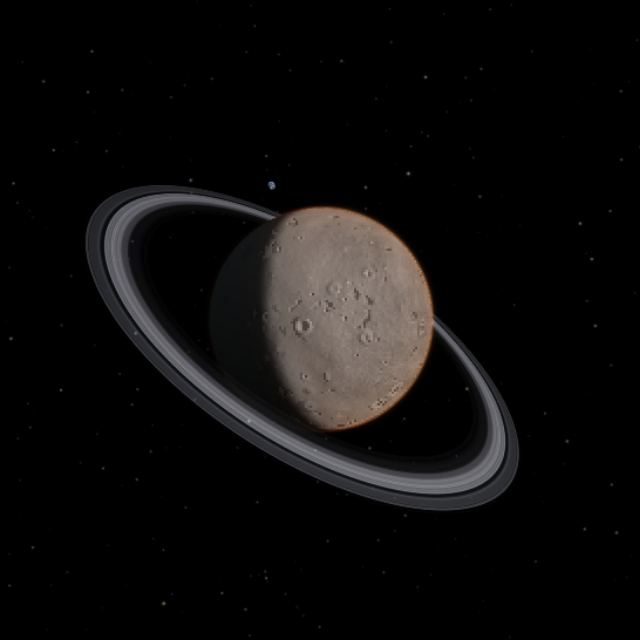
Grefna
0
Rocky Terrestrial
✦ LuminaeMagnetic FieldLow Activity
Why is this a Rocky Terrestrial?Your planet is dominated by silicate (31.2%) and iron (15.6%) content, forming a rocky terrestrial body.
Rocky terrestrial planets are primarily composed of silicate rocks and metals. They're the most common type of small planet in the universe.
Classification Criteria:
✓ Silicon: 31.2% + Iron: 15.6% + Magnesium: 10.4%✓ Mass: 0.7x Earth (terrestrial range)
Habitability ScoreUninhabitable
Contributing Factors
water0
No water - the recipe has no hydrogen and oxygen to form it
geology60
Some geological activity provides slow nutrient cycling
rotation100
Optimal rotation period - balanced day/night cycle, moderate weather, and good heat distribution
Organic Chemistry0
Limited organic chemistry potential - chlorine-laced environment attacks organic molecules
atmosphere70
Nitrogen atmosphere provides protection but not breathable
temperature0
Near absolute zero - all molecular activity ceases, impossible for life
magnetic Field100
Magnetic field provides radiation protection
Physical Properties
Mass
0.70x Earth (4.18e+24 kg)Radius
0.89x Earth (5,657 km)Surface Gravity
0.89x Earth (8.7 m/s²)Surface Temperature
40 K (-234 °C / -388 °F)Rotation Period
27.0 hours/day (slower than Earth)Orbital Environment
Star Type
F-type (White)Distance from Star
120.50 AU (18 billion km)Orbital Period
1,160 yearsAtmosphere
Thin, dusty nitrogen atmosphere
Elemental Composition
Si - Silicon
31.2%
Fe - Iron
15.6%
O - Oxygen
13.0%
Surface Characteristics
Rocky surface with impact craters, possible volcanic featuresClosest Real Exoplanet
No close real-world analog — your planet is one of a kind among the confirmed exoplanets in the NASA Exoplanet Archive.Browse all 5,568 real exoplanetsLearn more about exoplanetsMoons
Moon 1stable0.00016% - 10.0 radii
Small and distant: a quiet, stable companion.
Moon 2rings0.071% - 2.2 radii
Inside the Roche limit (2.80 planet radii): torn apart into a ring system.