Entering orbit…
AI assistant
Habitability
49/ 100
View planet
View star system
View surface
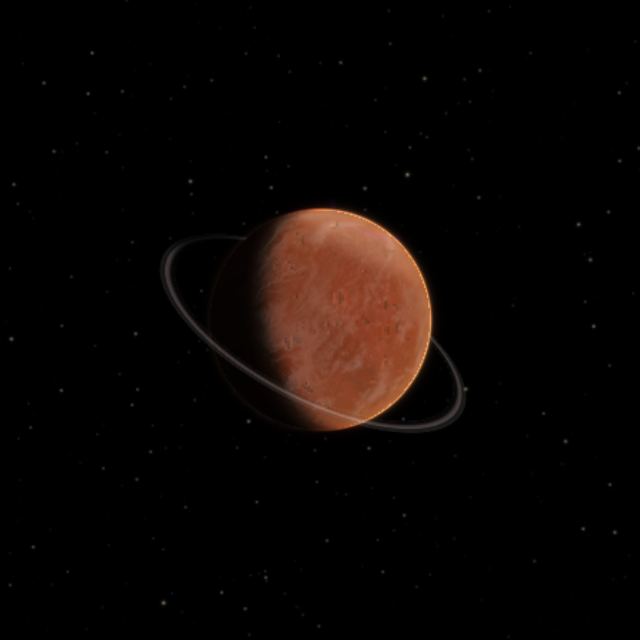
Apoph'll & Kni'e
0
Knight has a new name!!!
Still free
This may be the final build.
0.45.03
Rocky Terrestrial
Magnetic FieldModerate Activity
Why is this a Rocky Terrestrial?Your planet is dominated by silicate (25.9%) and iron (42.6%) content, forming a rocky terrestrial body.
Rocky terrestrial planets are primarily composed of silicate rocks and metals. They're the most common type of small planet in the universe.
Classification Criteria:
✓ Silicon: 25.9% + Iron: 42.6% + Magnesium: 3.7%✓ Mass: 0.9x Earth (terrestrial range)
Habitability ScoreMarginal
Contributing Factors
water20
Very dry - minimal water
geology90
Active geology recycles nutrients and drives carbon cycle
rotation100
Optimal rotation period - balanced day/night cycle, moderate weather, and good heat distribution
Organic Chemistry84
Core organic elements (CHNO) present (tidal pools cycle wet and dry - a boost for prebiotic chemistry)
atmosphere70
Nitrogen atmosphere provides protection but not breathable
temperature100
Optimal temperature range for liquid water and life (large moon stabilizes the axial tilt - steady seasons)
magnetic Field100
Magnetic field provides radiation protection
Physical Properties
Mass
0.90x Earth (5.37e+24 kg)Radius
0.97x Earth (6,151 km)Surface Gravity
0.97x Earth (9.5 m/s²)Surface Temperature
284 K (11 °C / 51 °F)Rotation Period
21.0 hours/day (faster than Earth)Orbital Environment
Star Type
G-type (Yellow (Sun-like))Distance from Star
0.96 AU (144 million km)Orbital Period
344 daysAtmosphere
Thin, dusty CO₂ and nitrogen atmosphere
Elemental Composition
Fe - Iron
42.6%
Si - Silicon
25.9%
N - Nitrogen
11.1%
Surface Characteristics
Rocky surface with impact craters, possible volcanic featuresClosest Real Exoplanet
TOI-700 e88% similar
Orbiting TOI-700| Yours | TOI-700 e | |
|---|---|---|
| Mass | 0.90 × Earth | 0.72 × Earth |
| Radius | 0.98 × Earth | 0.92 × Earth |
| Density (composition) | 5.19 g/cm³ | 5.10 g/cm³ |
| Temperature | 283.7 K | 273.0 K |
| Starlight received | 1.09 × Earth | 1.27 × Earth |
| Star temperature | 5,600 K | 3,459 K |
Moons
Moon 1rings0.0050% - 1.5 radii
Inside the Roche limit (2.80 planet radii): torn apart into a ring system.
Moon 2recedingSilicate rock0.63% - 58.6 radii
Outside the synchronous orbit: slowly receding, like Luna (~cm per year).