Entering orbit…
AI assistant
Habitability
30/ 100
View planet
View star system
View surface
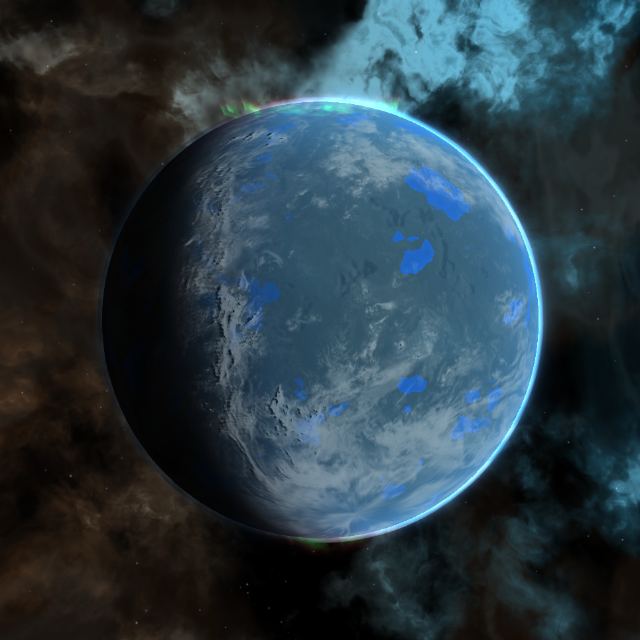
f-1c
0
Rocky Terrestrial
✦ f-1Magnetic FieldModerate Activity
Why is this a Rocky Terrestrial?Your planet is dominated by silicate (18.8%) and iron (12.5%) content, forming a rocky terrestrial body.
Rocky terrestrial planets are primarily composed of silicate rocks and metals. They're the most common type of small planet in the universe.
Classification Criteria:
✓ Silicon: 18.8% + Iron: 12.5% + Magnesium: 0.0%✓ Mass: 1.0x Earth (terrestrial range)
Habitability ScoreExtremely Harsh
Contributing Factors
water90
Good water content — shielded under ice and rock, a subsurface refuge could outlast the blast
geology90
Active geology recycles nutrients and drives carbon cycle
rotation100
Optimal rotation period - balanced day/night cycle, moderate weather, and good heat distribution
Organic Chemistry50
Carbon and hydrogen present - organic chemistry possible
atmosphere50
CO₂ atmosphere with moderate greenhouse effect
temperature70
Challenging but potentially habitable temperature
magnetic Field100
Magnetic field provides radiation protection — but the remnant's shock fronts flood this orbit with cosmic rays
Physical Properties
Mass
1.00x Earth (5.97e+24 kg)Radius
1.00x Earth (6,371 km)Surface Gravity
1.00x Earth (9.8 m/s²)Surface Temperature
323 K (50 °C / 121 °F)Rotation Period
24.0 hours/dayOrbital Environment
Star Type
SNR-type (Supernova Remnant)Distance from Star
0.54 AU (80.8 million km)Orbital Period
122 daysAtmosphere
Thin CO₂ atmosphere
Elemental Composition
H - Hydrogen
50.0%
Si - Silicon
18.8%
Fe - Iron
12.5%
Surface Characteristics
Rocky surface with impact craters, possible volcanic featuresClosest Real Exoplanet
Gliese 12 b94% similar
Orbiting Gliese 12| Yours | Gliese 12 b | |
|---|---|---|
| Mass | 1.00 × Earth | 0.95 × Earth |
| Radius | 1.01 × Earth | 0.93 × Earth |
| Density (composition) | 5.30 g/cm³ | 6.51 g/cm³ |
| Temperature | 322.8 K | 315.0 K |
| Starlight received | 1.71 × Earth | 1.62 × Earth |
| Star temperature | — | 3,328 K |