Entering orbit…
AI assistant
Habitability
81/ 100
View planet
View star system
View surface
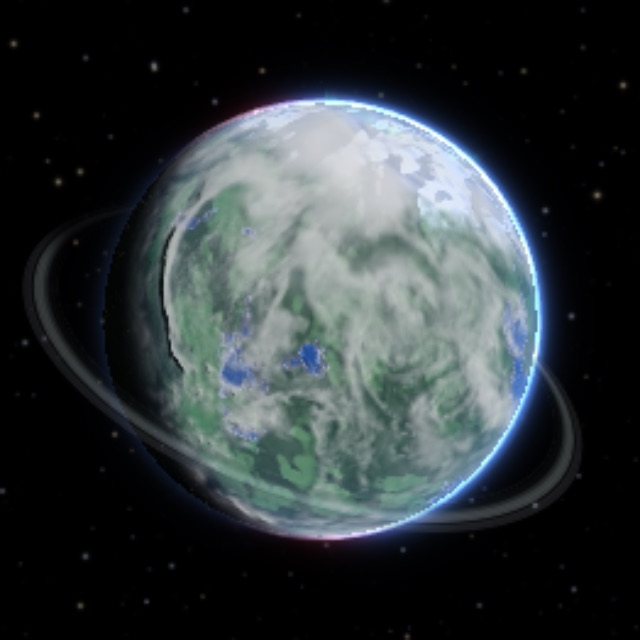
Praxor
0
A small world covered in grass forests at least ten feet tall. Shallow seas hold aquatic life, and the grass forests are home every kind of creature imaginable, from the lumbering Terramotuses who trample paths through the grass, to the agile, monkey-like Scandors.
Earth Like
✦ SEDA—1Life possibleMagnetic FieldModerate Activity
Why is this a Earth Like?Your planet has a balanced composition with all CHNOPS elements, proper mass (0.8x Earth), and sits in the habitable zone at 2.63 AU.
Earth-like planets have the perfect combination of composition, temperature, mass, and magnetic field to potentially support complex life as we know it.
Classification Criteria:
✓ All CHNOPS elements present (C, H, N, O, P, S)✓ Mass: 0.8x Earth (0.5-2.0x range)✓ Temperature: 268K (250-320K range)✓ Magnetic field present✓ Distance: 2.63 AU (habitable zone)
Habitability ScoreHighly Habitable
Contributing Factors
water48
Limited water content - mostly frozen
geology90
Active geology recycles nutrients and drives carbon cycle
rotation100
Optimal rotation period - balanced day/night cycle, moderate weather, and good heat distribution
Organic Chemistry80
Core organic elements (CHNO) present
atmosphere100
Nitrogen-oxygen atmosphere - breathable and protective
temperature70
Challenging but potentially habitable temperature
magnetic Field100
Magnetic field provides radiation protection
Physical Properties
Mass
0.80x Earth (4.78e+24 kg)Radius
0.93x Earth (5,914 km)Surface Gravity
0.93x Earth (9.1 m/s²)Surface Temperature
268 K (-5 °C / 23 °F)Rotation Period
24.0 hours/dayOrbital Environment
Star Type
F-type (White)Distance from Star
2.63 AU (393 million km)Orbital Period
3.74 yearsAtmosphere
Nitrogen-oxygen atmosphere with trace CO₂, water vapor, and argon
Elemental Composition
Si - Silicon
29.4%
O - Oxygen
24.7%
Fe - Iron
17.6%
Surface Characteristics
Rocky surface with continents, oceans, and active plate tectonics. Diverse biomes if life present.Closest Real Exoplanet
TOI-700 e84% similar
Orbiting TOI-700| Yours | TOI-700 e | |
|---|---|---|
| Mass | 0.80 × Earth | 0.72 × Earth |
| Radius | 0.94 × Earth | 0.92 × Earth |
| Density (composition) | 5.27 g/cm³ | 5.10 g/cm³ |
| Temperature | 268.3 K | 273.0 K |
| Starlight received | 0.87 × Earth | 1.27 × Earth |
| Star temperature | 6,750 K | 3,459 K |
Moons
Moon 1rings0.00079% - 1.3 radii
Inside the Roche limit (2.80 planet radii): torn apart into a ring system.