Entering orbit…
AI assistant
Habitability
46/ 100
View planet
View star system
View surface
erden
0
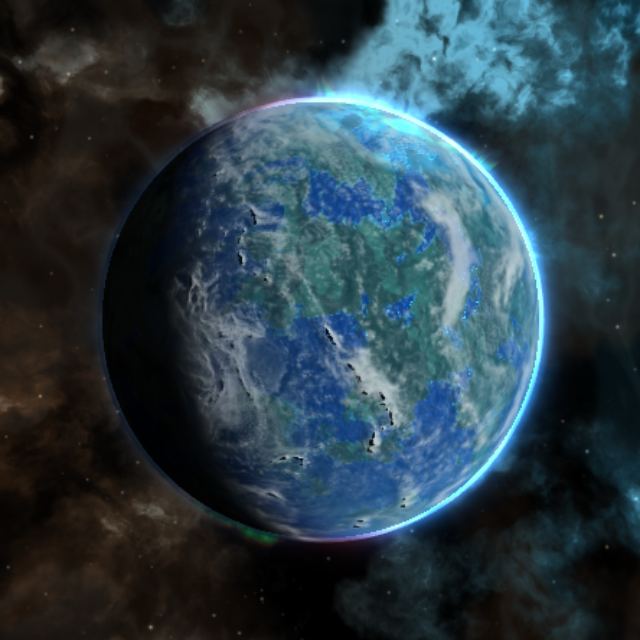
a terraformed world whose green algal mats and silicone-producing plant life were genetically engineered to be able to survive the planet's harsh conditions, whose life was better adapted to live on its surface than the life on urtern and its sister world
Earth Like
✦ allestaMagnetic FieldModerate Activity
Why is this a Earth Like?Your planet has a balanced composition with all CHNOPS elements, proper mass (1.8x Earth), and sits in the habitable zone at 0.72 AU.
Earth-like planets have the perfect combination of composition, temperature, mass, and magnetic field to potentially support complex life as we know it.
Classification Criteria:
✓ All CHNOPS elements present (C, H, N, O, P, S)✓ Mass: 1.8x Earth (0.5-2.0x range)✓ Temperature: 280K (250-320K range)✓ Magnetic field present✓ Distance: 0.72 AU (habitable zone)
Habitability ScoreMarginal
Contributing Factors
water50
Limited water content — shielded under ice and rock, a subsurface refuge could outlast the blast
geology90
Active geology recycles nutrients and drives carbon cycle
rotation60
Fast rotation - strong global wind patterns and weather systems, but manageable
Organic Chemistry80
Core organic elements (CHNO) present
atmosphere100
Nitrogen-oxygen atmosphere - breathable and protective
temperature100
Optimal temperature range for liquid water and life
magnetic Field100
Magnetic field provides radiation protection — but the remnant's shock fronts flood this orbit with cosmic rays
Physical Properties
Mass
1.80x Earth (1.07e+25 kg)Radius
1.22x Earth (7,750 km)Surface Gravity
1.22x Earth (11.9 m/s²)Surface Temperature
280 K (6 °C / 43 °F)Rotation Period
9.0 hours/day (faster than Earth)Orbital Environment
Star Type
SNR-type (Supernova Remnant)Distance from Star
0.72 AU (108 million km)Orbital Period
189 daysAtmosphere
Nitrogen-oxygen atmosphere with trace CO₂, water vapor, and argon
Elemental Composition
O - Oxygen
31.3%
Si - Silicon
25.0%
N - Nitrogen
12.5%
Surface Characteristics
Rocky surface with continents, oceans, and active plate tectonics. Diverse biomes if life present.Closest Real Exoplanet
TOI-700 d94% similar
Orbiting TOI-700| Yours | TOI-700 d | |
|---|---|---|
| Mass | 1.80 × Earth | 1.58 × Earth |
| Radius | 1.17 × Earth | 1.15 × Earth |
| Density (composition) | 6.15 g/cm³ | 5.72 g/cm³ |
| Temperature | 279.5 K | 269.0 K |
| Starlight received | 0.96 × Earth | 0.85 × Earth |
| Star temperature | — | 3,459 K |