Entering orbit…
AI assistant
Habitabilityno longer habitable
View planet
View star system
View surface
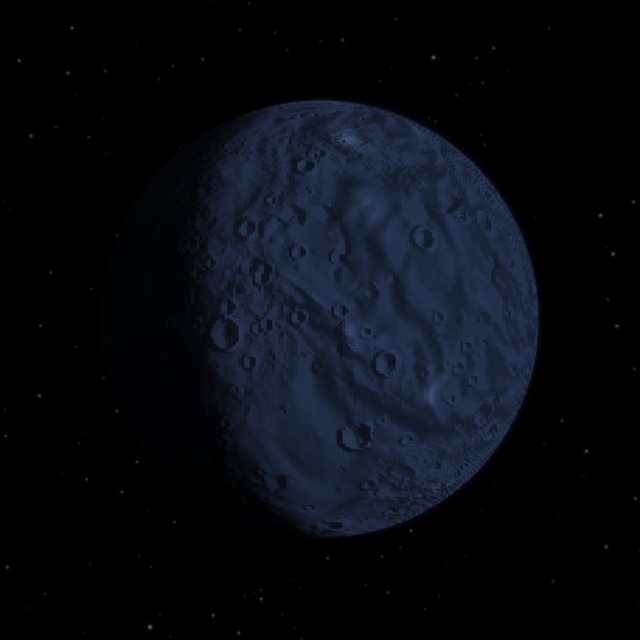
Untitled Rocky Terrestrial
0
Rocky Terrestrial
✦ Ringed nebulaDestroyed — no longer habitableMagnetic FieldModerate Activity
Why is this a Rocky Terrestrial?Your planet is dominated by silicate (28.6%) and iron (28.6%) content, forming a rocky terrestrial body.
Rocky terrestrial planets are primarily composed of silicate rocks and metals. They're the most common type of small planet in the universe.
Classification Criteria:
✓ Silicon: 28.6% + Iron: 28.6% + Magnesium: 0.0%✓ Mass: 1.0x Earth (terrestrial range)
Habitability
Destroyed — no longer habitablePhysical Properties
Mass
1.00x Earth (5.97e+24 kg)Radius
1.00x Earth (6,371 km)Surface Gravity
1.00x Earth (9.8 m/s²)Surface Temperature
278 K (5 °C / 41 °F)Rotation Period
24.0 hours/dayOrbital Environment
Star Type
NS-type (Neutron Star)Distance from Star
0.10 AU (15 million km)Orbital Period
10 daysTime Dilation
Clocks run 6.5 seconds per year slower than deep space — about 9 minutes over a lifetimeAtmosphere
Minimal or none
Elemental Composition
Ti - Titanium
42.9%
Fe - Iron
28.6%
Si - Silicon
28.6%
Surface Characteristics
Rocky surface with impact craters, possible volcanic featuresClosest Real Exoplanet
Teegarden's Star b95% similar
Orbiting Teegarden's Star| Yours | Teegarden's Star b | |
|---|---|---|
| Mass | 1.00 × Earth | 1.16 × Earth |
| Radius | 1.01 × Earth | 1.05 × Earth |
| Density (composition) | 5.30 g/cm³ | 5.52 g/cm³ |
| Temperature | 278.0 K | 277.0 K |
| Starlight received | 1.00 × Earth | 1.08 × Earth |
| Star temperature | — | 3,034 K |