Entering orbit…
AI assistant
Habitability
47/ 100
View planet
View star system
View surface
urtern
0
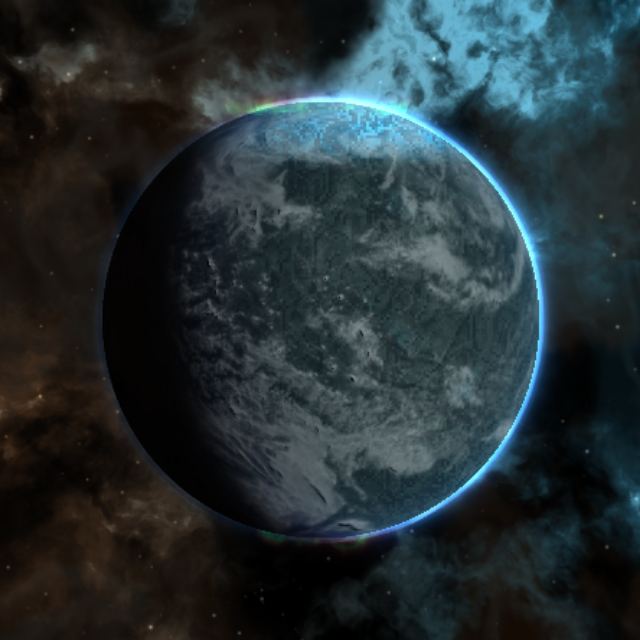
a planet whose coniferous trees have adapted to ways of living devoid of DNA and ATP, its terraformed surface now abandoned by the intergalactic builders who once colonised its surface
Its plant life, a descendant of unns
Rocky Terrestrial
✦ detrisNo life — no phosphorus — DNA and ATP are built on itMagnetic FieldHigh Activity
Why is this a Rocky Terrestrial?Your planet is dominated by silicate (21.3%) and iron (21.3%) content, forming a rocky terrestrial body.
Rocky terrestrial planets are primarily composed of silicate rocks and metals. They're the most common type of small planet in the universe.
Classification Criteria:
✓ Silicon: 21.3% + Iron: 21.3% + Magnesium: 8.5%✓ Mass: 1.4x Earth (terrestrial range)
Habitability ScoreMarginal
Contributing Factors
water50
Limited water content — shielded under ice and rock, a subsurface refuge could outlast the blast
geology90
Active geology recycles nutrients and drives carbon cycle
rotation100
Optimal rotation period - balanced day/night cycle, moderate weather, and good heat distribution
Organic Chemistry80
Core organic elements (CHNO) present
atmosphere70
Nitrogen atmosphere provides protection but not breathable
temperature100
Optimal temperature range for liquid water and life
magnetic Field100
Magnetic field provides radiation protection — but the remnant's shock fronts flood this orbit with cosmic rays
Physical Properties
Mass
1.40x Earth (8.36e+24 kg)Radius
1.12x Earth (7,127 km)Surface Gravity
1.12x Earth (11.0 m/s²)Surface Temperature
277 K (4 °C / 40 °F)Rotation Period
21.0 hours/day (faster than Earth)Orbital Environment
Star Type
SNR-type (Supernova Remnant)Distance from Star
0.71 AU (106 million km)Orbital Period
185 daysAtmosphere
Thin CO₂ and nitrogen atmosphere
Elemental Composition
O - Oxygen
23.4%
Fe - Iron
21.3%
Si - Silicon
21.3%
Surface Characteristics
Rocky surface with impact craters, possible volcanic featuresClosest Real Exoplanet
TOI-700 d95% similar
Orbiting TOI-700| Yours | TOI-700 d | |
|---|---|---|
| Mass | 1.40 × Earth | 1.58 × Earth |
| Radius | 1.11 × Earth | 1.15 × Earth |
| Density (composition) | 5.65 g/cm³ | 5.72 g/cm³ |
| Temperature | 277.4 K | 269.0 K |
| Starlight received | 0.99 × Earth | 0.85 × Earth |
| Star temperature | — | 3,459 K |