Entering orbit…
AI assistant
Habitability
12/ 100
View planet
View star system
View surface
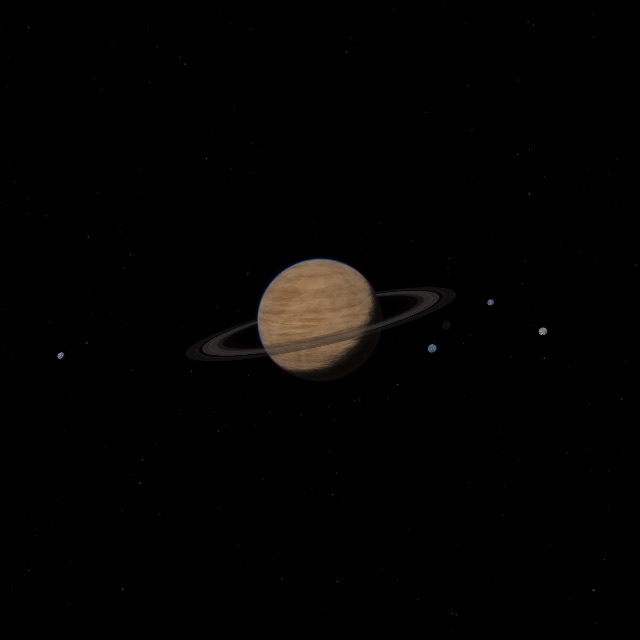
Saturn
1
- Mass
- 95.00 × Earth
- Radius
- 4.56 × Earth
- Gravity
- 4.56 g
- Surface
- 88 K
- Year
- 32.1 years
- Day
- 11.0 hrs
- Mass
- 95.00 × Earth
- Radius
- 4.56 × Earth
- Gravity
- 4.56 g
- Surface
- 88 K
- Year
- 32.1 years
- Day
- 11.0 hrs
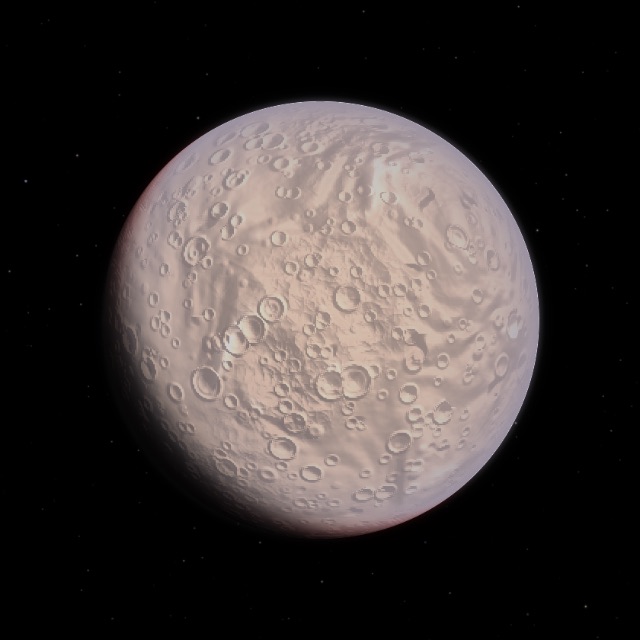
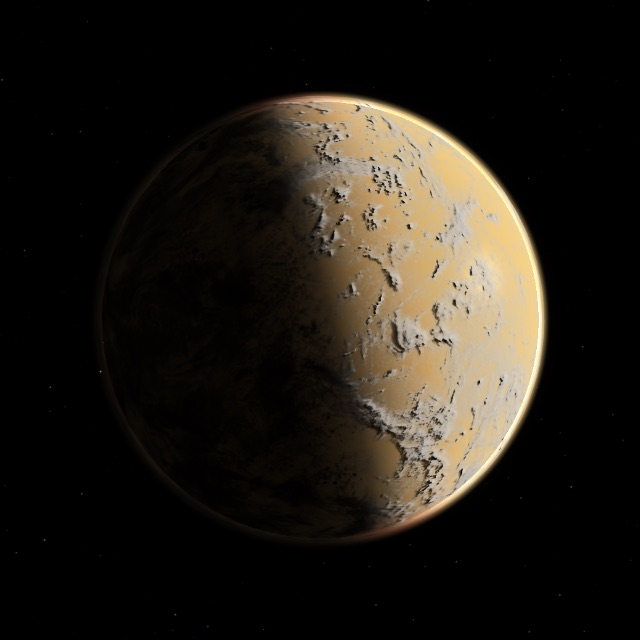
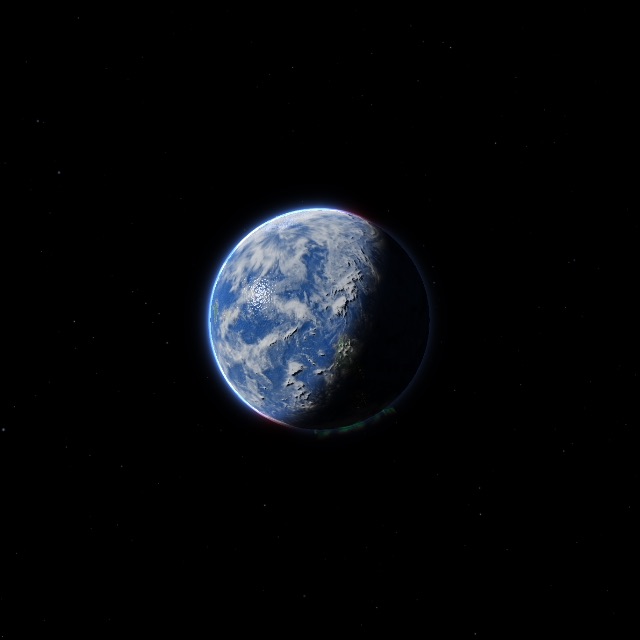
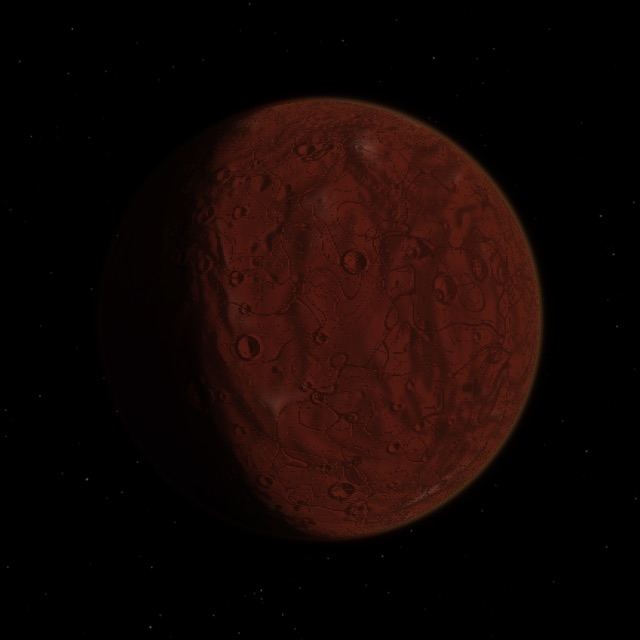
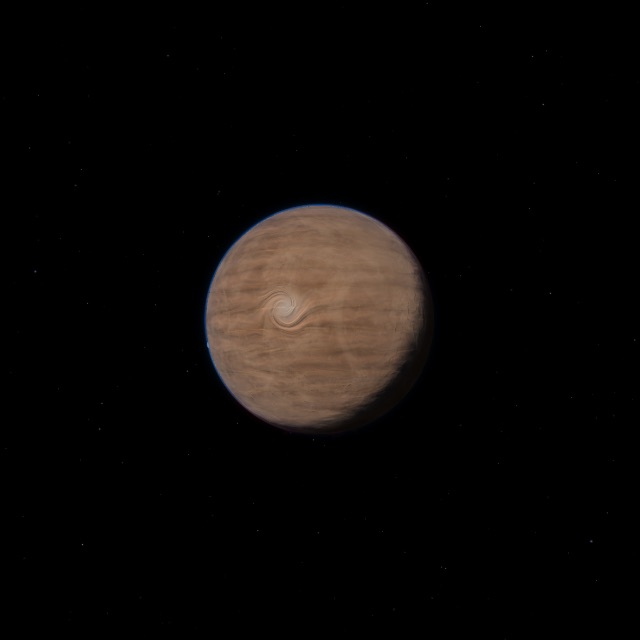 SaturnYou are hereGas Giant
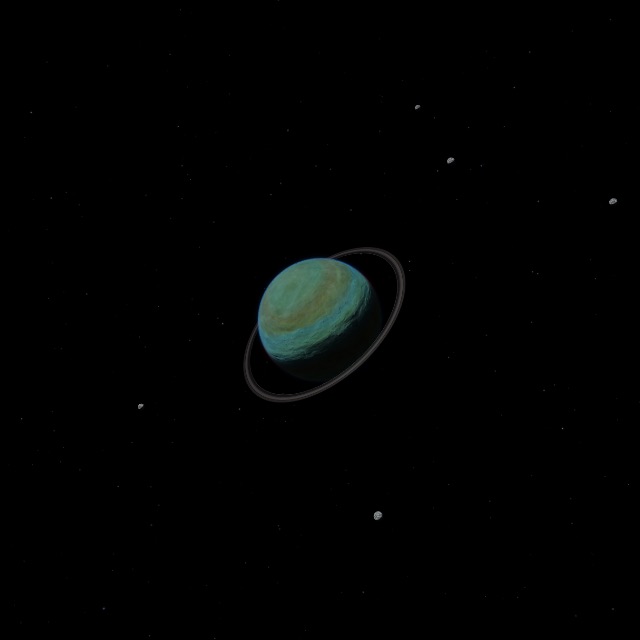
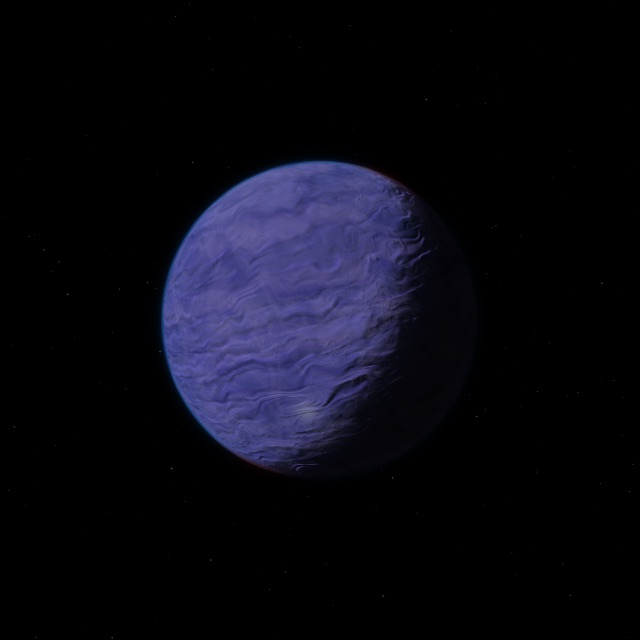
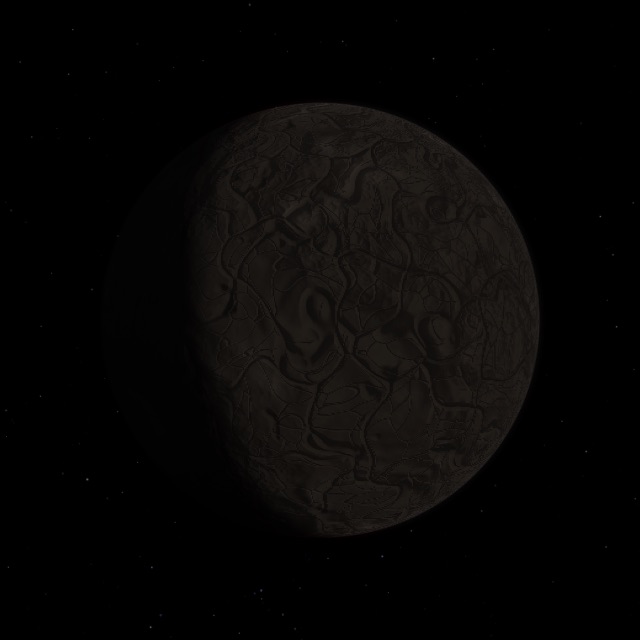

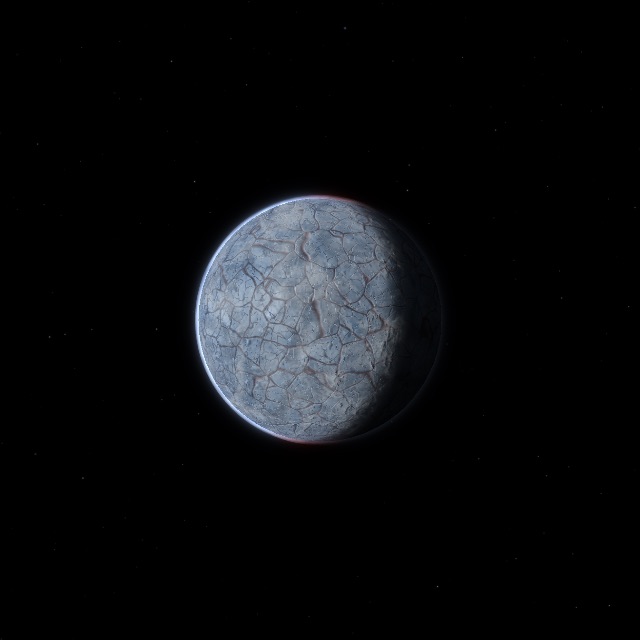
Habitable zoneDebris belt
Star and planets drawn to scale (a typical star of its class), with only the star's edge in view. Orbits spaced as in the star system view.
Saturn's moons
7 moons
Moon 3Ice · 123,000 km
Moon 4Ice · 117,700 km
Moon 5Iron · 140,500 km
Moon 6Carbon · 179,200 km
Moon 7Ice · 249,700 km
Moon 8Ice · 591,500 km
Moon 9Rock · 1,748,100 km
Planet, moons and orbits drawn to one scale; the smallest moons are enlarged so they can be seen.
“The planet has a bright and extensive system of rings, composed mainly of ice particles, with a smaller amount of rocky debris and dust. At least 293 moons orbit the planet, of which 63 are officially named; these do not include the hundreds of moonlets in the rings.”
Surface. No solid surface - thick gaseous envelope with possible rocky core deep within
Gas Giant
✦ Sol (Solar System)
Your planet has 85.0% hydrogen and helium, combined with a mass of 95.0x Earth, which exceeds the gas giant threshold.Magnetic FieldExtreme Activity
Gas giants form when massive cores capture enormous atmospheres of light gases. They typically form beyond the 'frost line' where volatiles can condense.
Classification Criteria:
✓ Hydrogen + Helium: 85.0% (>60% required)✓ Mass: 95.0x Earth (>10x required)
Habitability ScoreUninhabitable
Contributing Factors
water15
No solid surface — any water is locked in a supercritical mantle and hot ice, not oceans
geology40
Extreme volcanic activity may be hazardous
rotation60
Fast rotation - strong global wind patterns and weather systems, but manageable
Organic Chemistry84
Core organic elements (CHNO) present (tidal pools cycle wet and dry - a boost for prebiotic chemistry)
atmosphere30
Hydrogen and helium dominated with trace methane and ammonia
Hydrogen-rich atmosphere typical of gas giantstemperature10
Frozen world - minimal potential for complex life
magnetic Field100
Magnetic field provides radiation protection
Physical Properties
Mass
95.00x Earth (5.67e+26 kg)Radius
4.56x Earth (29,070 km)Surface Gravity
4.56x Earth (44.8 m/s²)Surface Temperature
88 K (-185 °C / -301 °F)Rotation Period
11.0 hours/day (faster than Earth)Elemental Composition
Closest Real Exoplanet
HIP 38594 c72% similar
Orbiting HIP 38594| Yours | HIP 38594 c | |
|---|---|---|
| Mass | 95.0 × Earth | 48.4 × Earth |
| Radius | 7.38 × Earth | 7.94 × Earth |
| Density (composition) | 1.30 g/cm³ | 0.53 g/cm³ |
| Temperature | 88.4 K | 80.0 K |
| Starlight received | 0.01 × Earth | 0.01 × Earth |
| Star temperature | 5,600 K | 4,086 K |
Moons
Moon 1rings0.50% - 1.3 radii
Inside the Roche limit (1.79 planet radii): torn apart into a ring system.
Moon 2rings0.095% - 2.3 radii
Inside the synchronous orbit: it spiraled inward and was torn apart at the Roche limit (Phobos's fate).
Moon 3stableWater ice0.00010% - 4.2 radii
Small and distant: a quiet, stable companion.
Moon 4stableNitrogen ices lost: water ice0.00010% - 4.0 radii
Small and distant: a quiet, stable companion.
Too warm for nitrogen and methane frost and too small to hold them as an atmosphere: those ices escaped to space, leaving water ice.
Moon 5stableIron-rich rock0.00010% - 4.8 radii
Small and distant: a quiet, stable companion.
Moon 6stableCarbon-rich0.00040% - 6.2 radii
Small and distant: a quiet, stable companion.
Moon 7stable0.00020% - 8.6 radii
Small and distant: a quiet, stable companion.
Moon 8stableNitrogen ices lost: water ice0.0030% - 20.3 radii
Small and distant: a quiet, stable companion.
Too warm for nitrogen and methane frost and too small to hold them as an atmosphere: those ices escaped to space, leaving water ice.
Moon 9stableSilicate rock0.00032% - 60.1 radii
Small and distant: a quiet, stable companion.