Entering orbit…
AI assistant
Habitability
0/ 100
View planet
View star system
View surface
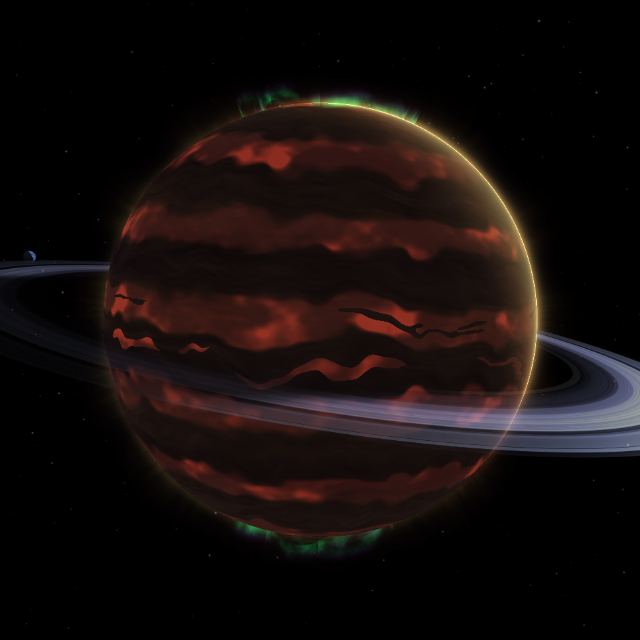
ax-10258b
Brown Dwarf
by talurist the builder- Mass
- 4545.00 × Earth
- Radius
- 16.56 × Earth
- Gravity
- 16.56 g
- Surface
- 424 K
- Year
- 1,233 years
- Day
- 7.0 hrs
- Mass
- 4545.00 × Earth
- Radius
- 16.56 × Earth
- Gravity
- 16.56 g
- Surface
- 424 K
- Year
- 1,233 years
- Day
- 7.0 hrs
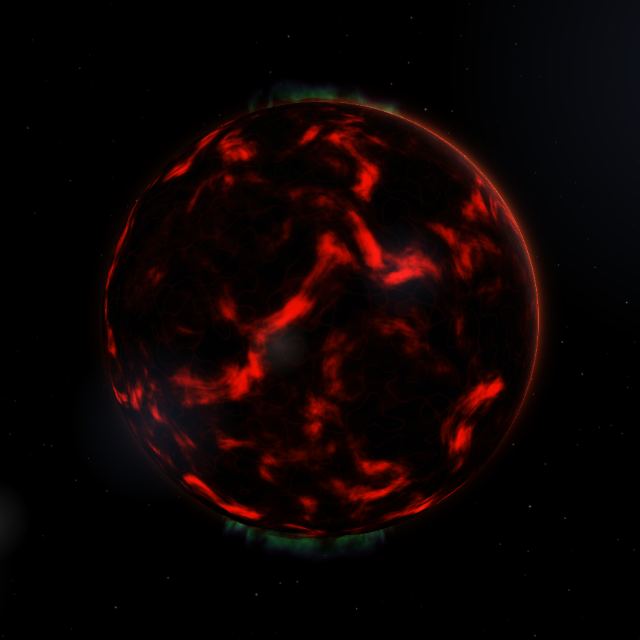
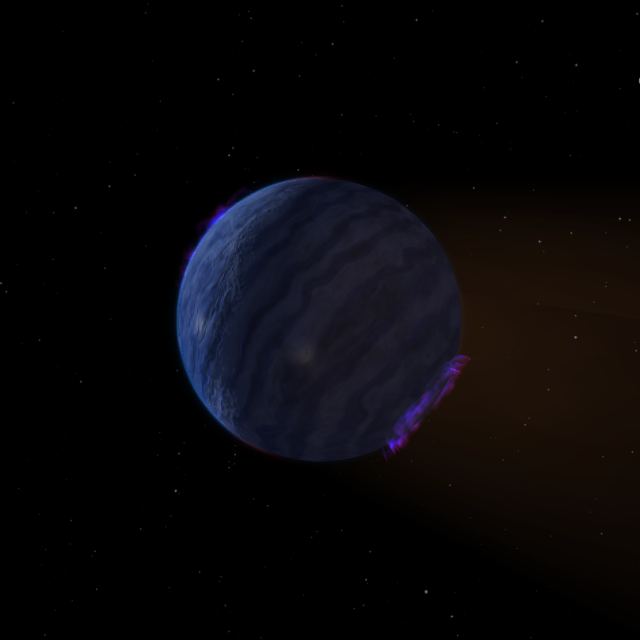
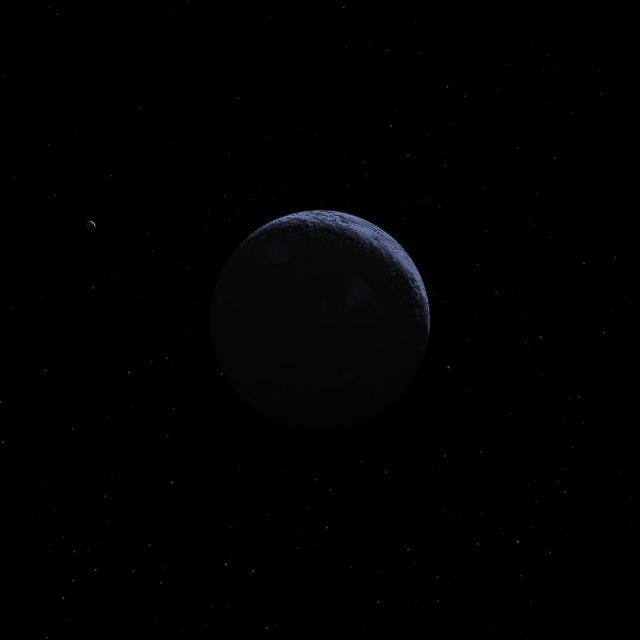
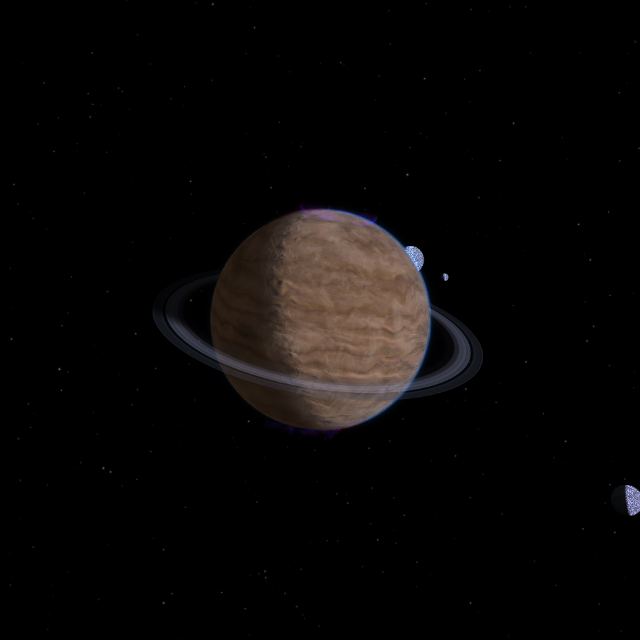
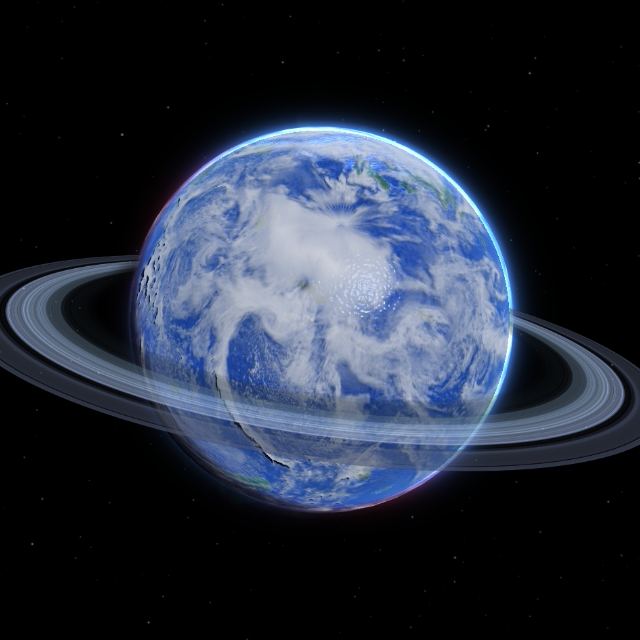
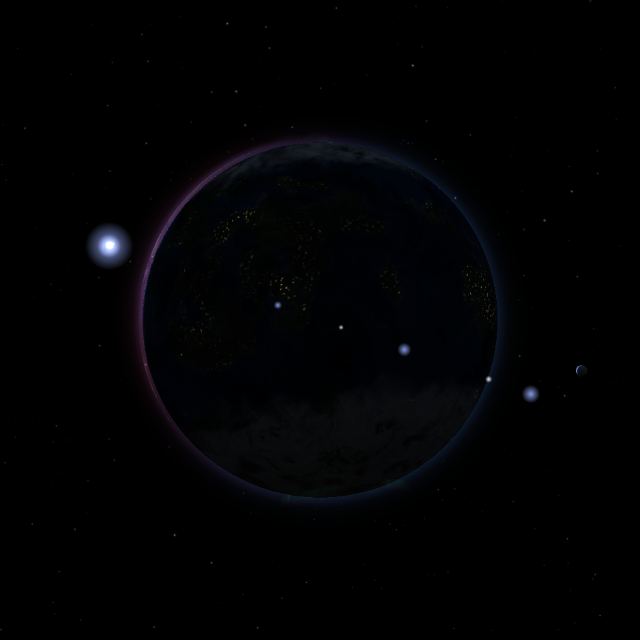
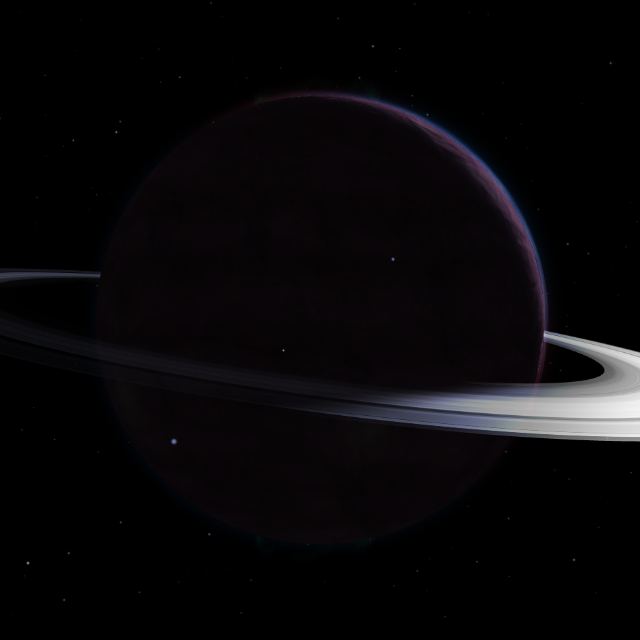
 ax-10258b144.90 AUBrown DwarfYou are here
Habitable zone
Star and planets drawn to scale (a typical star of its class), with only the star's edge in view. Orbits spaced as in the star system view.
ax-10258b's moons
5 moons · life may exist on a moon
Moon 2Ocean · 776,400 km
Moon 3Ocean · 1,541,100 km
Moon 4Ice · 2,862,500 km
Moon 5Ice · 4,454,800 km
Moon 6Ice · 6,345,900 km
Planet, moons and orbits drawn to one scale; the smallest moons are enlarged so they can be seen.
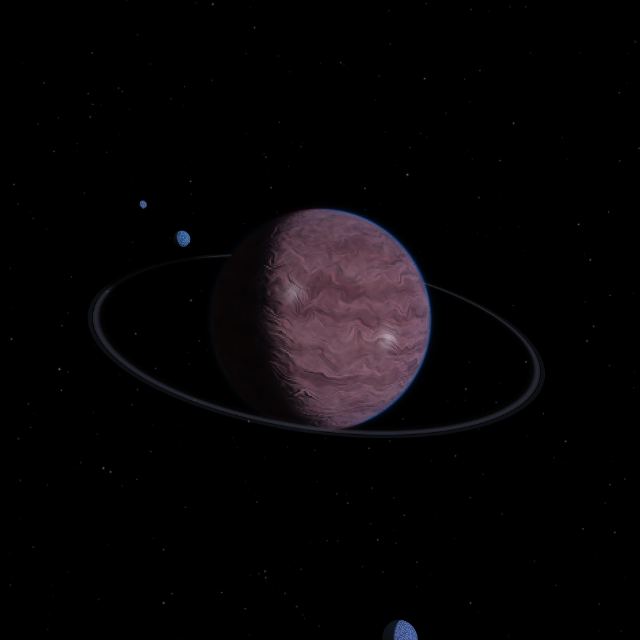
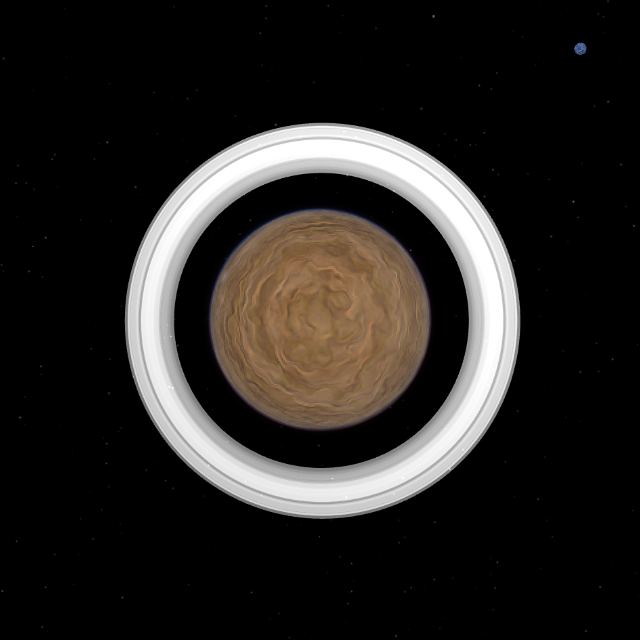
is a third or failed star of ax-10258 system with also beautiful rings and is most massive thing in ax-10258 system
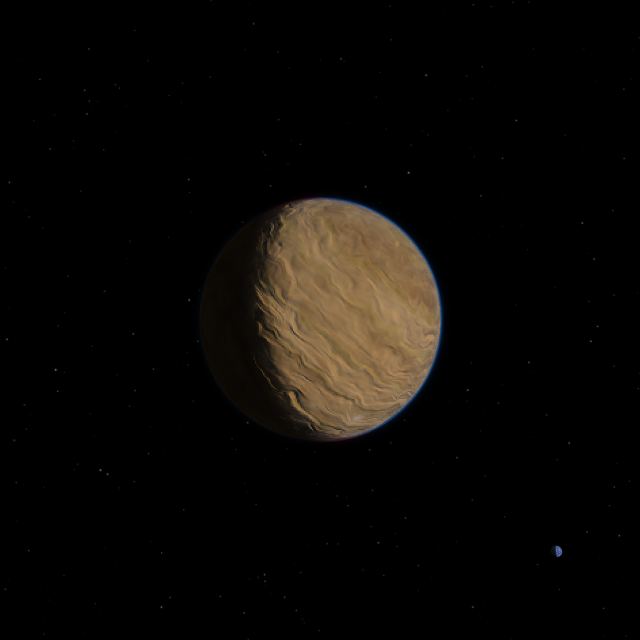
Surface. No surface: the coldest class of failed star, barely warmer than a summer day and glowing only in the infrared
Brown Dwarf
✦ ax-10258
Your planet has an unusual composition that doesn't fit standard classifications, or lacks the elements needed for complex geological processes.Magnetic FieldNone Activity
Barren worlds can form from uncommon element combinations or may be remnants of larger bodies that lost their atmospheres and volatile materials.
Classification Criteria:
Composition doesn't match standard planet typesMass: 4545.0x EarthTemperature: 424K
Habitability ScoreUninhabitable
Contributing Factors
water15
No solid surface — any water is locked in a supercritical mantle and hot ice, not oceans
geology40
Geologically dead - no nutrient recycling (tidal flexing sustains geologic activity)
rotation10
Near tidally locked - one hemisphere perpetually scorched, other frozen, narrow habitable twilight zone only
Organic Chemistry80
Core organic elements (CHNO) present
atmosphere12
Cold hydrogen and helium with ammonia and water clouds
Hydrogen-rich atmosphere typical of gas giants (partially stripped by slow rotation)temperature15
Extremely hot - hostile to known life forms
magnetic Field20
A strong field, but no surface beneath it — there is nothing here for it to shelter
Physical Properties
Mass
4545.00x Earth (2.71e+28 kg)Radius
16.56x Earth (105,532 km)Surface Gravity
16.56x Earth (162.5 m/s²)Surface Temperature
424 K (151 °C / 304 °F)Rotation Period
7.0 hours/day (faster than Earth)Elemental Composition
Closest Real Exoplanet
HIP 63734 b76% similar
Orbiting HIP 63734| Yours | HIP 63734 b | |
|---|---|---|
| Mass | 4,545 × Earth | 3,500 × Earth |
| Radius | 16.6 × Earth | 12.4 × Earth |
| Density (composition) | — | 10.1 g/cm³ |
| Temperature | 424.5 K | — |
| Starlight received | 0.00 × Earth | 0.00 × Earth |
| Star temperature | 8,750 K | 6,149 K |
MoonsLife may exist on a moon
Moon 1rings
Inside the Roche limit (1.79 planet radii): torn apart into a ring system.
Moon 2recedingOcean world - life possible
Outside the synchronous orbit: slowly receding, like Luna (~cm per year).
Tidal braking locked the planet to its moon: one face forever moonward.
Tidal heat sustains a subsurface ocean over a rock seafloor: a strong candidate for life (Europa-like, 56/100).
Moon 3recedingOcean world - life possible
Outside the synchronous orbit: slowly receding, like Luna (~cm per year).
Tidal heat sustains a subsurface ocean over a rock seafloor: a strong candidate for life (Europa-like, 45/100).
Moon 4stable
Small and distant: a quiet, stable companion.
Moon 5stable
Small and distant: a quiet, stable companion.
Moon 6stable
Small and distant: a quiet, stable companion.
Moon 7merged
Merged with an adjacent moon: too close for both to hold a stable orbit.
+10 geology: tidal flexing sustains geologic activity