Entering orbit…
AI assistant
Habitability
48/ 100
View planet
View star system
View surface
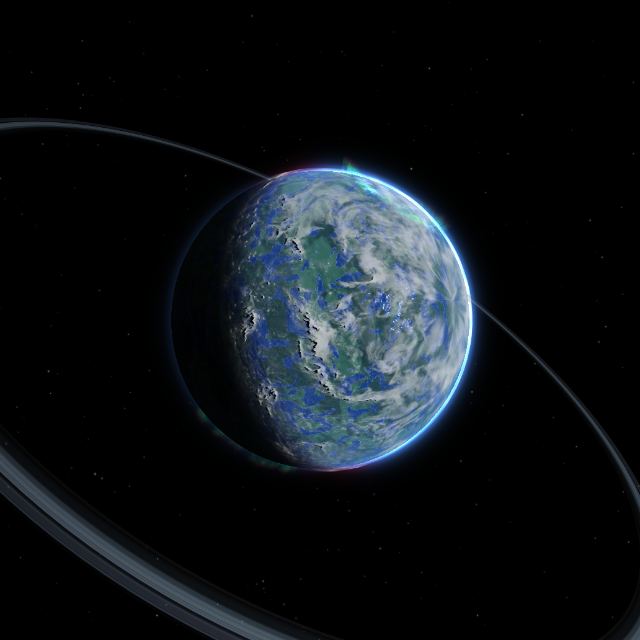
Karexya
0
Earth Like
✦ NecàìoLife DetectedMagnetic FieldModerate Activity
Why is this a Earth Like?Your planet has a balanced composition with all CHNOPS elements, proper mass (0.8x Earth), and sits in the habitable zone at 0.14 AU.
Earth-like planets have the perfect combination of composition, temperature, mass, and magnetic field to potentially support complex life as we know it.
Classification Criteria:
✓ All CHNOPS elements present (C, H, N, O, P, S)✓ Mass: 0.8x Earth (0.5-2.0x range)✓ Temperature: 294K (250-320K range)✓ Magnetic field present✓ Distance: 0.14 AU (habitable zone)
Habitability ScoreMarginal
Contributing Factors
water50
Limited water content
geology90
Active geology recycles nutrients and drives carbon cycle
rotation100
Optimal rotation period - balanced day/night cycle, moderate weather, and good heat distribution
Organic Chemistry80
Core organic elements (CHNO) present
atmosphere100
Nitrogen-oxygen atmosphere - breathable and protective
temperature100
Optimal temperature range for liquid water and life
magnetic Field100
Magnetic field provides radiation protection — but the pulsar's beams bathe this orbit in hard X-rays
Physical Properties
Mass
0.80x Earth (4.78e+24 kg)Radius
0.93x Earth (5,914 km)Surface Gravity
0.93x Earth (9.1 m/s²)Surface Temperature
294 K (21 °C / 69 °F)Rotation Period
22.0 hours/day (faster than Earth)Orbital Environment
Star Type
NS-type (Neutron Star)Distance from Star
0.14 AU (20.9 million km)Orbital Period
16 daysAtmosphere
Nitrogen-oxygen atmosphere with trace CO₂, water vapor, and argon
Elemental Composition
He - Helium
24.2%
O - Oxygen
20.2%
Si - Silicon
16.1%
Surface Characteristics
Rocky surface with continents, oceans, and active plate tectonics. Diverse biomes if life present.Closest Real Exoplanet
TRAPPIST-1 e91% similar
Orbiting TRAPPIST-1| Yours | TRAPPIST-1 e | |
|---|---|---|
| Mass | 0.80 × Earth | 0.69 × Earth |
| Radius | 0.94 × Earth | 0.92 × Earth |
| Density (composition) | 5.27 g/cm³ | 4.90 g/cm³ |
| Temperature | 293.9 K | 250.0 K |
| Starlight received | 0.51 × Earth | 0.65 × Earth |
| Star temperature | — | 2,566 K |
Moons
Moon 1rings0.014% - 2.7 radii
Inside the Roche limit (2.80 planet radii): torn apart into a ring system.